Combat Knife Basics: What Every Beginner Needs to Know
When you’re stepping into the world of fixed-blades and tactical knives, you quickly discover that there’s a lot more to a combat knife than just “a sharp edge”. Whether you’re new to the blades-community or simply looking for a reliable tool built in America, one of the first questions you’ll ask is: what do I really need to know about combat knives? In this blog we’ll cover the fundamentals of combat knives, the key basics every beginner should understand, and why choosing a manufacturer like Stroup Knives—an American company making high-quality combat gear—can make all the difference. Because if you’re shopping for veteran-owned knives, you want more than just a brand name—you want craftsmanship, provenance, and performance.
In the following sections we’ll break down the anatomy of a combat knife, the crucial materials and design considerations, how to select for your intended use, and what sets Made-in-USA blades apart. Then we’ll zero in on Stroup Knives as a case study of an American firm producing combat-grade blades and truly living the “veteran-owned knives” ethos. Let’s get started.
1. Anatomy of a Combat Knife – The Basics
To begin, any serious combat or tactical knife has several components that matter: the blade, the handle, the sheath or carrier, and often ancillary features like guard, pommel, tang style, and ergonomics. For a beginner, understanding these core elements is key.
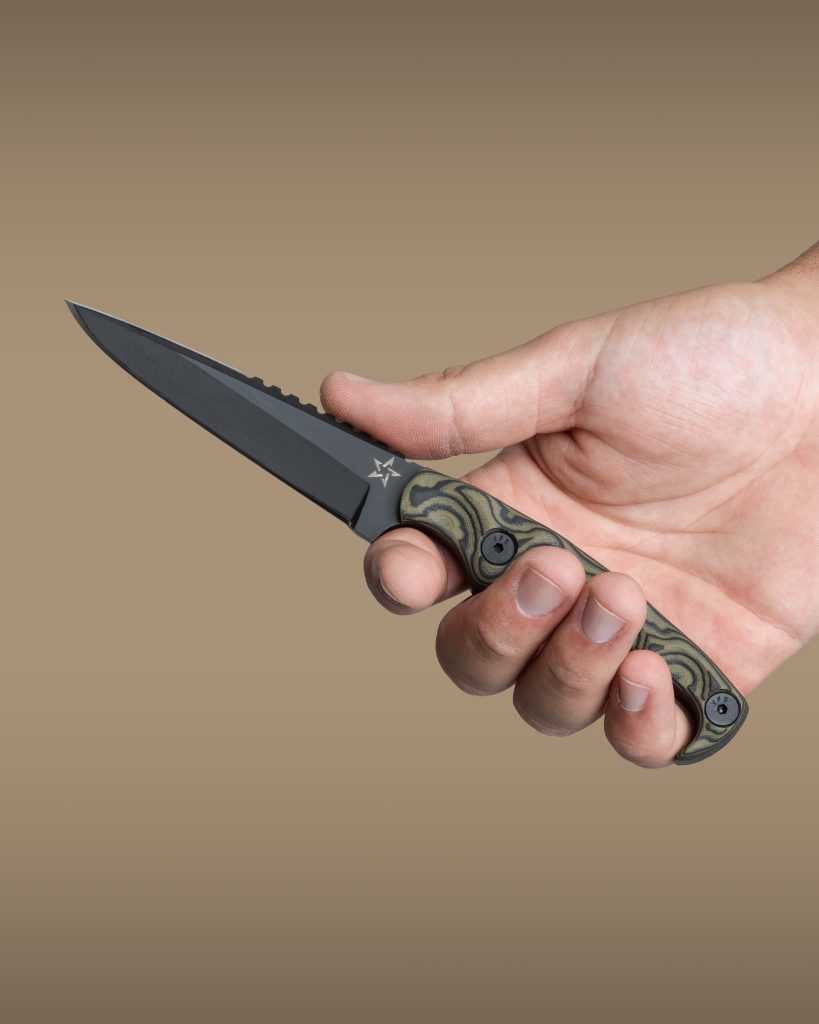
Blade length and profile – A “combat knife” by definition is typically a fixed-blade tool designed for aggressive or tactical use (versus everyday carry pocket knives). Beginners should look in the 3.5- to 5-inch blade length range for general purpose tactical use: large enough to provide reach and leverage, but still manageable and carry-friendly. Those shorter than 3 inches may be too limiting; those above 6 inches may become cumbersome.
Blade shape and grind – The profile matters: drop point, spear point, tanto, dagger/needle point each have trade-offs. Drop points offer versatility (good for slicing, utility), spear and dagger points favour piercing. Grind (flat, hollow, high/low) affects sharpness, strength and ease of sharpening. Beginners should choose a robust grind they can maintain.
Material and hardness – The blade material matters enormously. Combat knives demand high toughness, edge retention, corrosion resistance and ease of sharpening. Lower-end steels may excel in one dimension but fail in others. We’ll cover material further in the next section.
Handle / grip ergonomics – A combat knife isn’t just about the blade; under stress you rely on the handle. Look for secure grip materials (G-10, micarta, stabilized wood, aluminum, steel), guard or finger choil for control, comfortable shape for your hand size, and good balance. Beginners often overlook the handle until they find their first “slippery” grip under load.
Tang and construction – Full-tang designs (blade steel extends through the handle) are renowned for durability and strength—important for combat/tactical scenarios. Partial tang or more exotic constructions may have trade-offs.
Sheath/carrier – The knife is only as good as your ability to carry and deploy it reliably. A well-designed Kydex, thermoplastic or leather sheath with secure retention and appropriate carry options (belt, MOLLE, boot, neck) is vital. Beginners should not skimp here.
2. What Makes a Knife Truly Combat-Grade
Not every fixed-blade is “combat grade”. For beginners these additional factors help distinguish what real tactical or fighting-knife designs include:
Edge geometry and durability – Combat knives often feature thicker spine or reinforced tip to resist chipping or breakage under stress. The edge geometry may favour resilience over razor-thin slices. Beginners should understand that “super thin for slicing” doesn’t always equate to best toughness in a fight.
Tip strength and guard – A strong tip resists breakage during thrusting or hard use; a guard prevents your hand from sliding onto the blade under recoil or sudden movement. Many tactical designs include guards or extended choils.
Retention and deployment speed – Combat use demands that your blade sits securely yet deploys quickly when needed. A good sheath must hold when moving, but allow fast draw when you need it. This balance is often overlooked by novices.
Corrosion and environmental resistance – Real combat knives must survive rain, salt air, humidity, sand, mud. Choose finishes (stonewash, DLC, black oxide, cerakote) and materials (stainless or high-carbon steels with proper finish) that handle the environment.
Maintenance and field serviceability – If you’re carrying a knife into demanding environments, you’ll want something you can maintain, sharpen, clean and repair if needed. Beginners often buy a decorative blade and forget that real combat tools require upkeep.
3. Keywords every beginner should ask
When you’re selecting a combat knife, keep this short checklist handy:
-
Is the blade Made in USA? If your priority is American-manufactured quality and supporting domestic industry, make sure the label says “Made in USA.”
-
Is it from a veteran-owned knives brand? For many buyers, supporting veteran-owned knives means you’re investing in companies run by former service members who understand real-world use.
-
What is the blade steel, hardness rating, and finish? Get actual numbers: e.g., 1095 steel with heat treat X, hardness 58–60 HRC, etc.
-
What’s the tang? Full-tang or something weaker?
-
How is the knife carried and deployed? Belt clip? Sheath? Boot?
-
What kind of warranty or service policy? Good companies back their blades with lifetime guarantees.
-
Can I handle it comfortably and confidently? Fit matters.
4. Why “Made in USA” Matters – and Why Veteran-Owned Knives Matter
When you choose a “Made in USA” knife, you’re choosing manufacturing standards, supply-chain control, labour quality, regulatory compliance and often proximity of parts and service. For combat knives or tactical tools this can matter because it means:
-
Faster service or replacement if something fails.
-
Better traceability and quality assurance.
-
Domestic legal/regulatory responsibility for materials and safety.
-
Better support for your local economy and skilled labour.
On top of that, buying veteran-owned knives adds another layer: many of these companies are founded by former service members who bring battlefield, military-training or tactical-unit experience to their designs. They understand what works under stress, what fails in real-life use, and what a soldier/operator expects from a blade. And you as a buyer get to support individuals who served—an intangible but meaningful benefit.
5. Spotlight on Stroup Knives
Now we bring in our featured brand: Stroup Knives. This company exemplifies many of the ideals just described. Founded by Chris Stroup, a proud U.S. Army veteran, Stroup Knives is a true example of the term veteran-owned knives. Their business philosophy centres on American manufacturing and serious tactical use. According to their website, they produce all knives “right here in the USA”. Stroup Knives+1
Here are some highlights of the brand relevant to beginners and experienced users alike:
-
They offer a lifetime guarantee against manufacturer defects—a pledge to stand behind quality. Stroup Knives+1
-
Their product line spans general-purpose fixed blades, tactical knives, everyday carry options, and specialty blades (for example, the Bravo 5 series, the MK2 combat knife, etc). Blade HQ+1
-
They emphasise “performance-driven blades that are built to last” and they are listed by retailers as USA origin. KnifeCenter.com+1
-
As a veteran-owned manufacturer, the underlying design philosophy aligns with the needs of operators, professionals, and serious hobbyists.
For a beginner looking to buy their first serious combat/tactical knife, Stroup Knives offers a credible path: you get the reassurance of a veteran-owned knives brand, you get American manufacturing, and you get a product lineage rooted in real-world use.
6. How to Choose Your First Combat Knife (Practical Steps)
Here’s a practical step-by-step process for a beginner:
Step 1: Define purpose. Are you buying a knife for self-defence, everyday carry (EDC), outdoor survival, or tactical kit use? For example, if your use-case is “urban survival” or “tactical operator carry”, you might prioritise portability, deployment speed, reliability.
Step 2: Set your size/weight threshold. For everyday carry within urban or tactical contexts, you might pick a blade around 3.5″–4.5″ with an overall length under 9″. Heavy outdoor camp knives may tolerate more.
Step 3: Look at specs. Confirm blade steel, hardness rating, tang style, handle material, sheath design.
Step 4: Check carry and deployment. Ensure you can draw it quickly, and that the sheath keeps it secure.
Step 5: Match your grip/ergonomics. Physically handle if possible; check the grip in your dominant hand, check reach to guard/choil.
Step 6: Consider the brand and support. Is it backed by a manufacturer with warranty, service, part replacements? A veteran-owned knives brand like Stroup Knives adds weight here.
Step 7: Budget and true cost. Don’t just buy cheap plastic fixed blades thinking all blades are equal. Quality counts. A well-made combat knife from a veteran-owned knives firm might cost more, but the value over time in reliability, service and performance often justifies the premium.
Step 8: Training and maintenance plan. A combat knife is a tool, not a showpiece. Be prepared to train with it, maintain the edge, clean/inspect, and carry it responsibly.
7. Maintenance, Training and Best Practices
Owning a combat knife involves responsibility. Here are best practices:
-
Always keep the blade sharp but not brittle—check for chips, tip damage, handle wear.
-
Clean and dry after exposure to moisture, sand, salt or grit; apply light oil to pivot or tang if needed.
-
Practice drawing and sheathing safely in a controlled environment; know how your knife behaves in real-world conditions (gloved hands, wet environment, urban use).
-
Store securely—fixed-blade knives should be sheathed and carried in accordance with local laws.
-
Train in basic deployment, grips, cuts, handling and retention in safe, legal settings. Even a beginner can benefit from simple drills.
-
Know your legal limits—carrying a fixed-blade tactical knife in public may be regulated; always check your jurisdiction.
8. Summary and Take-Away for Beginners
As a beginner stepping into the realm of combat knives, you don’t need to get overwhelmed. Focus on fundamentals: size, blade material, handle ergonomics, sheath/retention, and brand credibility. Prioritise knives that are Made in USA if you value domestic manufacturing. And especially if you want to support service-based businesses, look for veteran-owned knives. Brands like Stroup Knives combine tactical legitimacy, American craft, and the veteran-owned identity you want.
Remember: your first combat or tactical knife is a tool—not a trophy. Choose it, carry it, train with it, and maintain it. With the right mindset and quality blade you’ll have a dependable companion for your adventures or tactical kit.
Welcome to the world of combat knives—may your choice be sharp, your edge true, and your carry safe.