How WWII Changed the Design of Modern Military Knives
Modern combat knives didn’t appear out of thin air. They were forged, tested, and perfected in the most violent, unpredictable, and demanding environment imaginable: World War II. Before the war, American servicemen carried an assortment of tools—hunting knives, trench relics from WWI, and hand-me-down field blades that were never intended for harsh multi-theater warfare. But once the United States entered WWII, the battlefield quickly revealed which designs were inadequate, which materials failed under pressure, and which features were absolutely necessary for a knife that could save a life, open a ration, pry a crate, or survive the jungle, desert, or frozen mud.
The result was a complete revolution in knife design. A revolution that still echoes today—especially in modern Made in USA blades forged by companies dedicated to the same battlefield-proven principles. Among the makers who carry that lineage forward, Stroup Knives stands out as a company crafting veteran-owned knives that embody the same durability, reliability, and field-driven performance forged during WWII. The knife a soldier carries today, the knife a hunter straps to his pack, and the knife a homeowner keeps ready in an emergency—all exist because WWII forced America to rethink what a real military knife should be.
This is the story of how WWII changed the design of modern military knives and how those lessons live on through veteran-owned knives proudly made on American soil.
The Pre-War Problem: Unreliable Tools Not Built for Combat
Before WWII, the U.S. military didn’t issue a universal combat knife. Many troops entered the war carrying civilian hunting knives, old trench knives with brass knuckles, or blades bought at hardware stores. While these knives had sentimental or utilitarian value, they weren’t built for the harsh environments that WWII would introduce. Steel quality varied wildly. Some knives rusted instantly in Pacific humidity. Some snapped when prying open crates. Others had handles that loosened or outright failed when soaked in rain, seawater, or mud.
When America entered a global conflict spanning Europe, the Pacific, and North Africa, the military quickly discovered that a knife was not just a piece of gear. It was survival. This pressure forced innovation. And this innovation laid the foundation for what modern veteran-owned knives—including Stroup Knives—still build upon today.
The KA-BAR: The First True Modern Fighting/Utility Knife
If there is one knife that symbolizes WWII’s impact, it is the USMC Fighting/Utility Knife—better known simply as the KA-BAR.
What made it revolutionary?
1. A strong, full-tang construction
Earlier knives often had hidden, partial tangs that bent or loosened under stress. WWII demanded a blade that wouldn’t fail in combat or survival situations, and the robust tang of the KA-BAR delivered.
2. A versatile clip-point blade
Clip-point geometry offered both penetrating capability and everyday utility. Soldiers could use the same knife to strip wire, carve wood, dig, and defend themselves.
3. A stacked leather handle
Grippy, durable, and manageable even when wet. This ergonomic improvement would influence every American combat knife that followed.
4. Consistent heat treatment
One of WWII’s unsung innovations was consistent metallurgy. The U.S. military demanded tighter tolerances and better performance. That expectation still defines high-quality Made in USA blades today.
Everything about the KA-BAR represented a shift from ornamental or traditional designs toward practical, no-nonsense blades intended to withstand the worst conditions on earth. Modern veteran-owned knives—including those crafted by Stroup Knives—owe part of their DNA to the KA-BAR’s wartime lessons. Durability. Functionality. No gimmicks. No failures.
Material Breakthroughs That Still Influence American Makers
WWII forced American factories to experiment with steels, coatings, heat treating methods, and handle materials. Shortages meant that companies had to innovate. The result?
-
1095 carbon steel became the standard.
-
Parkerizing prevented rust—critical in tropical combat.
-
Stronger heat treatment protocols ensured predictability and reliability.
-
Synthetic handle materials replaced fragile wood.
These breakthroughs became the backbone of the American tactical knife industry. Today, veteran-owned knives keep these traditions alive by focusing on real-world performance rather than cheap mass-production. Companies like Stroup Knives rely on these old lessons while leveraging modern enhancements—new coating technology, updated steels, and improved ergonomics—to produce knives that WWII soldiers would have trusted with their lives.
Ergonomics and Combat Doctrine Shifted Everything
WWI trench knives were heavy, awkward, and designed for a single purpose: close-quarters fighting. WWII made such specialized weapons obsolete. Soldiers needed a knife that could fight, cut rope, open crates, sharpen stakes, clear brush, and survive the battlefield.
This shift created several modern design principles:
-
Lightweight construction for speed and mobility
-
Streamlined profiles that wouldn’t catch on gear
-
Grip designs usable with gloves or wet hands
-
Balanced blades that could chop, slice, and thrust equally well
These ergonomic principles became the cornerstones of modern design. You’ll find them reflected nearly identically in today’s veteran-owned knives, especially those crafted by Stroup Knives, whose geometry, handle shaping, and weight distribution reflect the same battlefield lessons that WWII taught American designers.
Veterans Returning Home Became the First Modern Knife Market
After the war, millions of American veterans carried home their combat knives. Many kept them for life. Some had theirs passed down to sons and grandsons. The knife became a symbol of American grit, self-reliance, and victory.
Veterans also helped shape the modern knife industry:
-
They demanded higher quality
-
They expected durability
-
They preferred Made in USA craftsmanship
-
They gravitated to companies run by fellow veterans
Today’s surge in appreciation for veteran-owned knives is not a trend—it’s a continuation of a tradition started in 1945. Veterans trust makers who understand the realities of real-world use. That’s why companies like Stroup Knives, built by veterans and forged in American grit, resonate so strongly today.
Stroup Knives: Modern Tools Built on WWII Values
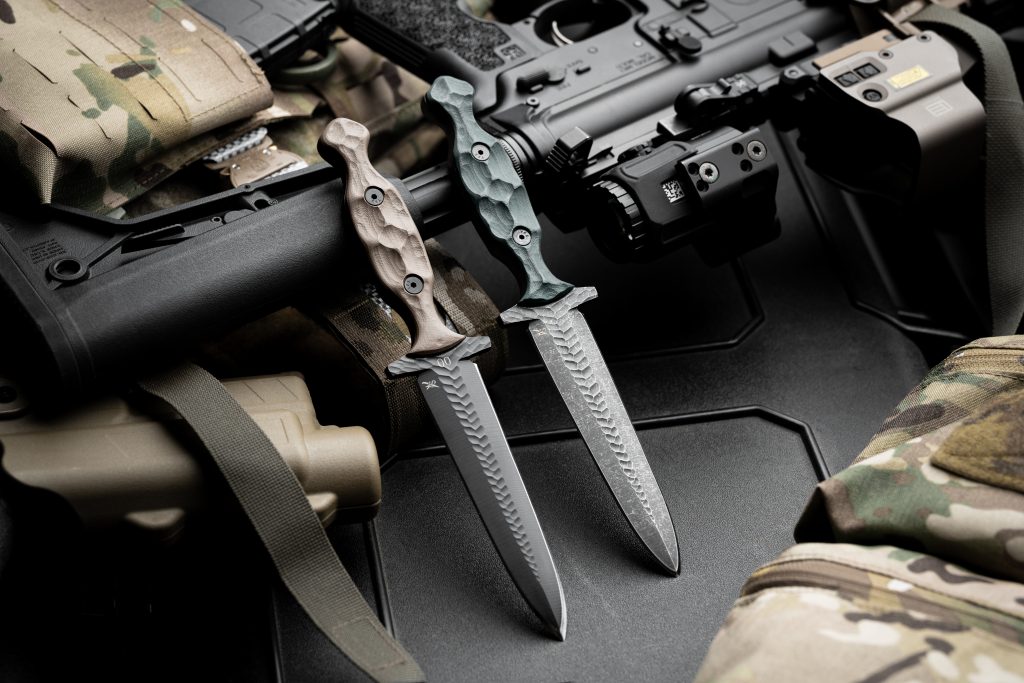
Stroup Knives doesn’t replicate WWII knives—but it stands on the foundation they built. Their designs are the modern evolution of wartime principles:
-
rugged field geometry
-
dependable full-tang construction
-
grippy handles designed for adverse conditions
-
steels chosen for edge retention and toughness
-
coatings that resist corrosion and extreme use
Every blade is a reflection of a lineage that began when American servicemen demanded better tools on the battlefields of WWII. When you hold a Stroup knife, you hold modern American craftsmanship sharpened by eighty years of wartime lessons.
And because these are veteran-owned knives, they’re crafted by people who understand what reliability truly means—people who understand that a knife is only useful if it works every time.
Conclusion: WWII Didn’t Just Change Knives—It Forged a Standard
The knives we rely on today exist because WWII revealed every weakness, every flaw, and every danger of inadequate design. That war forced America to innovate, adapt, and perfect the combat/utility knife. Today, those innovations still define what a dependable blade should be.
Modern makers like Stroup Knives keep that legacy alive. Their veteran-owned knives combine WWII’s hard-earned lessons with modern materials and American craftsmanship. They are Made in USA, built to endure, and designed with the same uncompromising standards that WWII soldiers demanded.
The war ended long ago, but the principles forged in its fires have never faded. They remain in the steel. They remain in the craftsmanship. And they remain alive in every modern blade built by American hands.