How Military Knives Shaped Special Forces History
Military knives have done far more than ride on the belts of warriors—these blades helped shape the very identity of Special Forces units across generations. From the shadowy operations of WWII’s OSS to the relentless operational tempo of modern Green Berets, SEALs, and Marine Raiders, knives have served as indispensable tools and trusted companions. In many ways, the history of Special Forces is inseparable from the evolution of their blades. And today, companies like Stroup Knives continue that legacy with American craftsmanship and veteran-owned knives built for the rigors of real-world use. When you blend battlefield heritage, modern forging intelligence, and Made in USA standards, you get a lineage forged in purpose.
This is the story of how military knives shaped Special Forces history—and how that legacy still lives today.
WWII: The Birth of the Modern Combat Blade
Special Forces did not exist in the form we know today until World War II. Unconventional warfare was still an emerging concept, and the Office of Strategic Services (OSS) pioneered it. Their missions required stealth, intelligence gathering, sabotage, and resistance coordination. For these operatives, the Fairbairn-Sykes fighting knife became not only a tool but a symbol of their craft.
Double-edged, slim, and designed for rapid use in tight quarters, that dagger shaped the doctrine of close-quarters combat and influenced decades of blade geometry. It demonstrated something Special Forces would never forget: in the right hands, a blade is silent, reliable, and brutally efficient.
World War II jungle units also relied heavily on Bowie-style fighters. These knives needed to do everything—from cutting shelter poles to survival fieldcraft—and they proved that a Special Forces blade had to be more than a weapon. It needed to be a lifeline.
This era laid the foundation for future Special Forces blades and helped establish the philosophy that still guides veteran-owned knives today: durability, reliability, adaptability, and craftsmanship.
Korea and the Long March Toward Modern SF Design
In the Korean War, newly formed Ranger companies carried knives as a standard part of their kit. The harsh mountains of the Korean Peninsula demanded versatility. Operators needed a knife that could chop through frozen earth, cut through heavy clothing, and still remain nimble in close-quarters encounters.
The lessons from WWII and Korea led to a shift: Special Forces blades evolved from pure fighting daggers into multipurpose field tools. This transition would explode into full maturity during the Vietnam War.
Vietnam: Where the Modern Special Forces Knife Was Forged
Vietnam redefined unconventional warfare—and with it, the role of the military knife. MACV-SOG, LRRP teams, and Special Forces A-teams operated deep inside hostile territory, often alone, unsupported, and surrounded. For many, their knife was their final backup when everything else failed.
Operators still carried fighting knives, but they began demanding more from their blades. They learned quickly that a flimsy or overly specialized knife could be a liability. The environment was unforgiving: humidity, mud, vines, bamboo, and dense underbrush required a blade that could slice, pry, dig, chop, and serve in dozens of improvised tasks.
This era birthed the true hybrid field-fighter—knives designed not just for combat but for every mission-essential task. Blade designs became thicker, more durable, and more ergonomic. Grips were rethought. Steels evolved. Sheath systems were reconsidered.
This is when Special Forces culture began modifying blades individually—sharpening angles, rewrapping handles, and personalizing knives to match the operator’s mission set. That tradition of customization is something still honored by veteran-owned knives craftsmen today, including Stroup Knives.
Modern Special Forces: A Knife That Matches the Mission
Even with today’s advanced gear—thermal imaging, UAV support, encrypted comms, and multi-million-dollar technology—Special Forces operators still carry a simple piece of steel on their kit.
Because technology fails. Steel doesn’t.
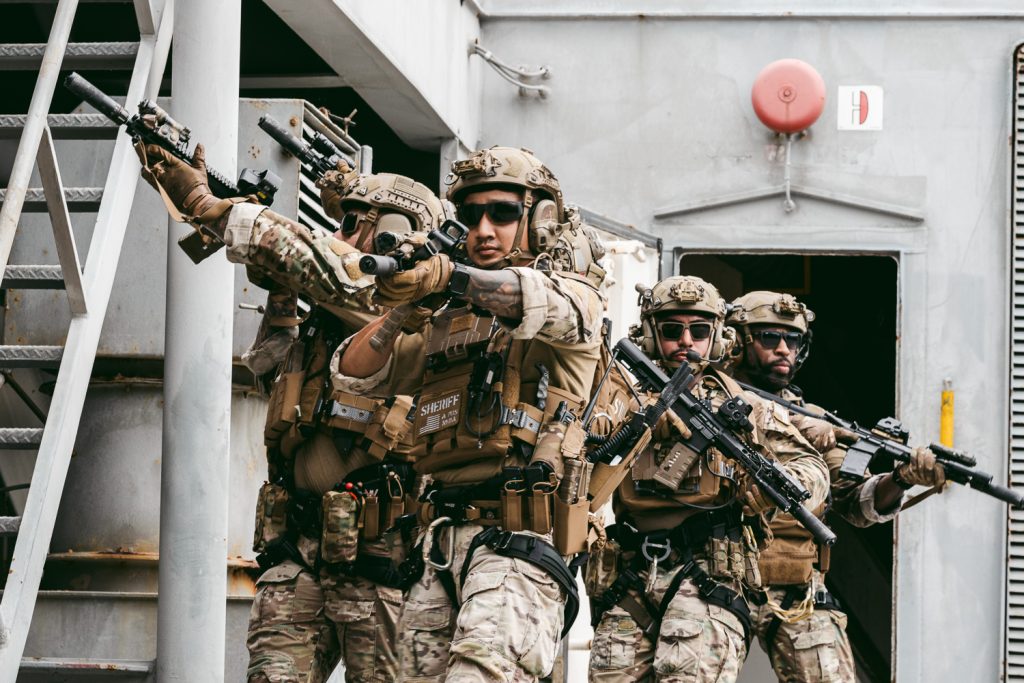
Modern Special Forces communities, including Green Berets, Marine Raiders, Navy SEALs, Air Force CCTs, and PJs, still rely on their knives for a wide range of tasks:
-
Cutting webbing and rope
-
Opening crates or breaching soft barriers
-
Improvised lifesaving tasks
-
Digging or prying in survival situations
-
Fieldcraft and shelter building
-
Breaking contact silently when needed
The true value of a military knife is not about theatrics—it is about absolute trust. Operators depend on their knives the same way they depend on their team: without hesitation.
And that is why many now choose veteran-owned knives over mass-produced imports. They want blades made by craftsmen who understand the mission because they have lived the mission.
Made in USA: The Return to American Craftsmanship
There has been a major shift in the blade world over the last decade. Buyers—especially those with military backgrounds—have become more educated. They demand better steels, stronger heat treatment, real-world testing, and honest American manufacturing.
Special Forces operators in particular want blades that are:
-
American forged
-
American heat-treated
-
American inspected
-
Built with battlefield reality in mind
This demand fueled the resurgence of veteran-owned knives, because operators trust the experience and authenticity behind companies like Stroup Knives.
Mass-produced imports simply cannot replicate the intent, precision, and integrity found in a blade made by an American veteran who understands what a knife must endure.
Stroup Knives: Carrying the Torch Into the Future
Stroup Knives is more than a brand—it is a continuation of Special Forces knife heritage. Chris Stroup, a veteran bladesmith, builds knives that reflect everything learned across decades of military operations.
Here’s why his blades resonate:
-
They are handmade in the USA
-
They use battle-proven steel types
-
They feature grip textures that work in sweat, mud, rain, or blood
-
They are purpose-driven, mission-first knives
-
They are tested and trusted by operators, outdoorsmen, and professionals
When you pick up a Stroup knife, you can feel its heritage. It feels like something you could take on deployment, into the backcountry, or through any survival challenge. It feels like a blade built with intent.
And because Stroup Knives stands among the leading creators of veteran-owned knives, you know it was made by someone who understands the consequences of gear failure.
The Legacy Lives On: Military Design in Today’s Blades
Modern tactical blades still borrow heavily from historic Special Forces knives. You can see it in the grinds, the blade geometry, the weight distribution, the handle angles, and even the sheaths.
Stroup Knives preserves these influences intentionally, blending:
-
OSS dagger aggression
-
SOG field utility
-
Ranger toughness
-
SEAL adaptability
-
Green Beret versatility
The result is a blade made for the modern warrior—civilian or military.
Conclusion: Steel, Legacy, and the Future of Special Forces Knives
Military knives shaped the history of Special Forces because they were tools forged for survival, innovation, and purpose. Today, that legacy continues through companies that honor the past and build for the future.
Stroup Knives stands at the forefront of that movement with true Made in USA craftsmanship and a full lineup of veteran-owned knives designed for real-world use. When you hold a blade forged by a veteran, you’re not just holding steel. You’re holding history, heritage, and the continuation of a warrior tradition that started long before—and will continue long after—modern missions evolve.
The tools change. Technology evolves. But a blade is forever.
And in the hands of Special Forces operators—and in the workshops of America’s veteran makers—the legacy continues.