
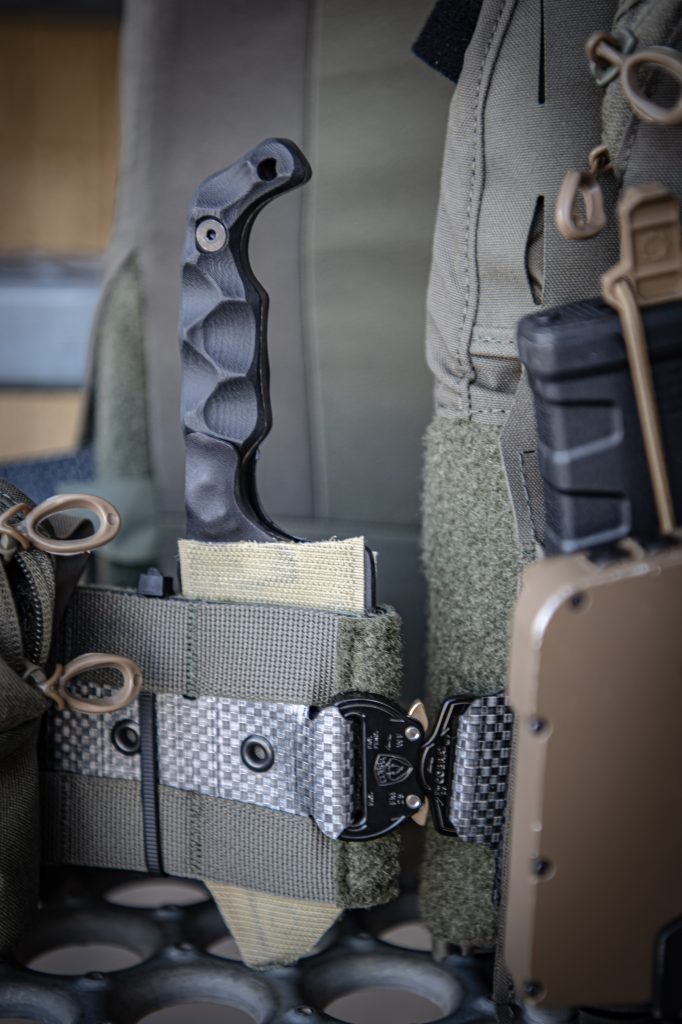
The Best Ways to Store and Protect Your Military Knives
Military knives are more than tools. They are an extension of the warrior behind them, a blend of steel, skill, and purpose forged for the realities of duty. Whether carried into deployment, strapped to a chest rig during training, or used as an everyday field companion, a military knife deserves respect—not just in how it’s used, but in how it’s protected. As a bladesmith who has spent years grinding, heat-treating, sharpening, and testing combat-ready blades, I can tell you this: the way you store your knife determines how long that blade will survive. Proper storage is not optional. It is a mission requirement.
And when you invest in American-made blades like Stroup Knives, built by a veteran-owned team that stands at the leading edge of today’s knife-crafting industry, you carry more than a weapon. You carry craftsmanship, experience, and the values behind veteran-owned knives. These blades are forged with intention, shaped by real-world battlefield knowledge, and designed for users who expect their gear to outlast the fight. Protecting them isn’t just maintenance—it’s honoring that craftsmanship.
This guide breaks down the best ways to store, preserve, and protect your military knives so they stay mission-ready for decades. Whether you own high-carbon Made in USA steel, carry a Stroup Knife every day, or collect veteran-owned knives as heirloom-grade tools, these principles will ensure your blades remain strong, sharp, and uncompromised.
Why Proper Storage Is the Lifeline of a Military Knife
Steel doesn’t fail overnight. It fails quietly, slowly, through environmental exposure, moisture accumulation, or improper handling. Most damage that a bladesmith repairs isn’t caused by combat—it’s caused by storage failures. Rust begins microscopically. Edge dulling starts the moment moisture touches the bevel. Handle materials degrade when left in uncontrolled environments.
When you store a knife the wrong way:
-
Carbon steel oxidizes
-
Edges dull
-
Leather traps moisture
-
Screws loosen
-
Grit embeds into the bevel
-
Micropitting grows under oil layers
And the worst part? Damage often goes unnoticed until it’s too late.
That’s especially true for high-quality American blades like Stroup Knives and other veteran-owned knives, which rely on precise heat treatment and high-carbon steel formulations. These steels offer maximum durability and cutting power, but they demand proper care. This isn’t a weakness—it’s the nature of performance steels. The better the steel, the more important its storage.
Understanding the Steel Behind Your Blade
The foundation of proper storage begins with understanding what your knife is made of. Military knives often use:
-
1095 high-carbon steel
-
80CrV2
-
5160 spring steel
-
CPM series steels (S35VN, S45VN, Magnacut)
Stroup Knives, for example, often use 1095 high-carbon steel because of its reliability, edge retention, and ease of field maintenance. Carbon steels perform exceptionally well in combat conditions but require more attention because they react quickly to moisture.
Made in USA standards ensure that steels are heat-treated properly, ground consistently, and tested in real-world conditions. Many mass-produced overseas knives lack this level of control. That’s why veteran-owned knives dominate the modern tactical landscape—they’re built by people who know what failure in the field looks like and refuse to compromise on the steel that prevents it.
Storing Military Knives at Home: Your Personal Arsenal
Your home storage should be treated like your armory. A poorly stored knife is a compromised knife, and even a few days of neglect can undo hundreds of hours of craftsmanship.
1. Control humidity
Humidity is the enemy of carbon steel. Ideally, knives should be stored at:
-
40–50% humidity
-
Away from basements, bathrooms, or garages
-
In a dedicated drawer, case, or wall mount
Adding silica gel packs or desiccant in storage boxes will dramatically increase the lifespan of your knife.
2. Avoid long-term storage in leather
Leather looks great, smells great, and feels traditional—but it is terrible for steel. Leather absorbs moisture, oil, sweat, and atmospheric humidity, trapping it against the blade. This accelerates rust.
If you want your knife displayed in leather, wipe it weekly and keep the blade lightly oiled.
3. Use Kydex or blade guards
Kydex is the gold standard for long-term storage:
-
Water-resistant
-
Mold-resistant
-
Retains shape
-
Doesn’t trap moisture
Stroup Knives uses rugged, American-built Kydex sheaths precisely for this reason. Pairing veteran-owned knives with low-quality sheaths is a mismatch—always use materials that protect the blade as much as the blade protects you.
4. Keep knives out of direct sunlight or heat
UV and heat degrade handle materials over time, especially polymer-based composites. This affects structural integrity and grip reliability.
Field Storage: Protecting Knives When It Really Matters
Real-world protection is different from home protection. In the field, your knife encounters sweat, dirt, salt, rain, mud, and friction.
Tips for field storage:
-
Wipe your blade after every use, even if it’s quick.
-
If it gets wet, dry it immediately.
-
Avoid exposing carbon steel to saltwater without cleaning afterward.
-
Use MOLLE-compatible Kydex, especially for concealed or secure carry.
-
Avoid cloth sheaths—they hold dirt like glue.
The advantage of veteran-owned knives like Stroup Knives is that they’re intentionally designed with rugged field storage in mind. Their sheaths, retention systems, and handle geometry minimize moisture accumulation and maximize readiness.
Long-Term Preservation Techniques
To protect your blade for decades, follow this blueprint:
1. Wipe and clean
Use microfiber—not cotton or paper towel—to avoid micro-scratching.
2. Oil the blade
Any of the following are acceptable:
-
Mineral oil
-
Gun oil
-
CLP
-
Camellia oil (for food prep blades)
High-carbon blades rust when they lack oil. A light coat is all that’s needed.
3. Use rust inhibitors
WD-40 isn’t enough. Use:
-
FrogLube
-
Eezox
-
Renaissance Wax
4. Store in a climate-stable case
Knife rolls, padded cases, or display cabinets are ideal for veteran-owned knives you want to keep pristine.
What NOT to Do
-
Don’t leave your knife in a leather sheath long-term
-
Don’t store a blade wet
-
Don’t keep knives loosely in toolboxes
-
Don’t store them in uncontrolled garages or sheds
-
Don’t wipe your blade on your jeans—that grit scratches mirror bevels
Why Choosing Veteran-Owned Knives Matters
A knife crafted by veterans carries experience, purpose, and American grit. That’s why veteran-owned knives deserve proper storage—they aren’t gimmicks, they’re crafted by people who understand the consequences of failure.
Protecting these blades is an extension of respecting the maker.
Made in USA means:
-
Better steel
-
Better heat treat
-
Better sheaths
-
Better durability
Preserving a Stroup Knife for Generations
Imagine handing a Stroup Knife down to your son, grandson, or great-granddaughter. It remains sharp, rust-free, beautiful, and functional because you followed the discipline that military blades deserve.
A Stroup Knife can last lifetimes—but only if stored properly.
Conclusion
Your military knife is only as dependable as the care behind it. Proper storage ensures maximum performance, reliability, and longevity. It protects the steel, the edge, and the craftsmanship that went into forging the blade.
For those who invest in Stroup Knives and other veteran-owned knives, storing and protecting your blade isn’t just maintenance—it’s honoring American craftsmanship. Treat your blade with respect, protect it with purpose, and it will be ready for every mission life throws your way.