How Special Forces Train With Combat Knives
Modern warfare may be dominated by drones, satellites, optics, and long-range engagement tactics, but the combat knife has never lost its relevance. In fact, among Special Forces operators, the knife remains one of the most trusted tools in any kit. It is silent, dependable, adaptable, and brutally effective when the distance collapses and technology no longer matters. This is why elite warriors train relentlessly with blades, and why so many of them gravitate toward American-made craftsmanship such as Stroup Knives—a benchmark in the world of veteran-owned knives.
Understanding how Special Forces train with combat knives requires looking past cinematic myths. Knife work is not about theatrics. It is not about spinning, flipping, or stylized choreography. It is about survival, discipline, and mastery of a tool that has existed since the earliest days of warfare. Knife training develops precision, confidence, adaptability, and the ability to stay calm in the most extreme close-quarters situations imaginable. This is why elite warriors still rely heavily on veteran-owned knives, trusting the experience and battlefield knowledge forged into every inch of American-made steel.
The Modern Operator’s Blade: Why Knife Training Still Matters
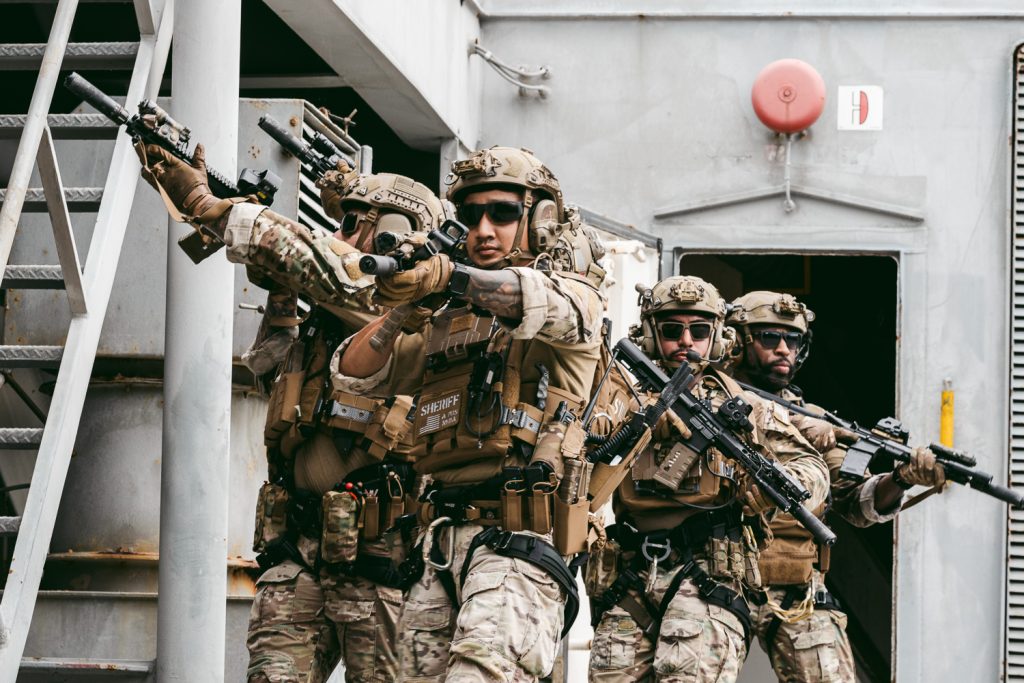
Despite advances in firearms and technology, Special Forces still operate in environments where close-quarters contact is unavoidable: narrow hallways, stairwells, vehicles, alleyways, ship corridors, dense jungle spaces, and rural structures with no light. In these environments, engagements can shrink from ten feet to one foot in less than a second. A blade becomes not just a weapon but a lifeline.
Knives require no ammunition. They do not jam. They function in mud, water, heat, and cold. They can pry open crates, cut through restraints, slice cordage, help dress game, dig, and serve dozens of field uses beyond combat. This multi-purpose nature is exactly why Stroup Knives, a Made in USA company built by combat veterans, produces blades designed to endure the unpredictable realities of real-world missions.
When operators choose veteran-owned knives, they are choosing a tool designed by someone who has been where they have been, carried the same weight on their belt, and understood the consequences of gear failure. That connection matters.
Training Foundations: Grip, Stance, Movement, and Familiarity
Knife training starts with fundamentals. Special Forces spend hours drilling grip positions—forward grip, reverse grip, and saber grip—each chosen for specific mission contexts. A forward grip may offer power and reach, while a reverse grip offers superior control in tight spaces. Mastery of these grips ensures that an operator can manipulate the blade instinctively, without hesitation, and without needing to visually confirm hand placement.
Footwork is equally important. Operators train how to shift weight, move off-line, pivot, and create angles. Mobility can determine who controls the engagement. This style of training is highly structured, focusing on efficiency rather than theatrics. A knife fight is not a prolonged duel—it is a sequence of fast, violent, and decisive motions carried out with the intent of ending a threat quickly and escaping safely.
Stroup Knives balances its blades precisely for this reason. The weight distribution, handle geometry, and contouring are optimized for real-world grip stability and blade indexing—attributes that come only from the lived experience behind veteran-owned knives.
Strike Training: Controlled, Precise, and Realistic
Special Forces knife fighting focuses on targeting key leverage points—muscle groups, tendons, and areas that disrupt an opponent’s movement. The goal is not theatrical “knife fencing” but realistic engagement training that honors battlefield ethics and discipline.
Training includes:
-
Short, targeted strikes
-
Deflection and redirection of incoming attacks
-
Maintaining control of the knife under pressure
-
Using the off-hand for trapping or controlling limbs
Operators also learn when not to use a blade. The knife is part of a broader combatives system that includes hand-to-hand work, firearm transitions, and coordination with teammates.
Through countless repetitions, operators learn how to generate power from tight positions and maintain blade orientation even during chaotic movement. Only a quality blade can withstand these constant impact drills, which is one more reason veteran-owned knives have become so trusted.
Stress Inoculation: Training for the Worst Conditions
Special Forces knife training is not done in sanitized environments. Operators practice:
-
Low-light or complete darkness scenarios
-
Exhaustion drills
-
Live grappling with training blades
-
Confined-space drills in vehicles or corridors
-
Surprise attack simulations
These sessions force the operator to trust their instincts and gear. When adrenaline spikes and the fine motor skills deteriorate, an operator must still identify, draw, orient, and utilize the knife effectively. This level of confidence comes only from intense training and from carrying a blade that can withstand extreme stress—exactly what Stroup Knives delivers through rugged Made in USA craftsmanship.
In elite units, equipment reliability is non-negotiable. That is why the demand for veteran-owned knives remains so strong.
Knife Retention: Keeping the Knife in the Fight
Operators train extensively to keep control of the blade when an opponent grabs, blocks, or attempts to disarm them. Retention includes:
-
Clinch-position blade work
-
Counter-grabs
-
Using sheath placement strategically for quick deployment
-
Body positioning to shield the knife during transitions
These drills blend seamlessly into broader Special Forces combatives programs, proving that knife training is not isolated—it is integrated into the operator’s full toolkit.
Stroup Knives sheaths and handle designs reflect this real-world need for positive retention, dependable draw, and controlled grip under sweat, mud, and extreme stress. Again, the hallmark of veteran-owned knives is function built from experience.
Field Utility: The True Purpose of a Combat Knife
Operators rely on their blades for far more than combat. Tasks include:
-
Breaching light materials
-
Cutting restraints
-
Survival tasks
-
Building shelters
-
Processing game
-
Equipment repair
This is why Stroup Knives builds knives with thick spines, durable edges, and ergonomic handles that can withstand hours of hard use. A knife that breaks, chips, or folds in the field becomes a liability, and Special Forces cannot afford liabilities.
Veteran-owned knives excel in this category because they are designed by people who understand these demands from firsthand experience.
Special Forces Training Exercises: Sharpening Skill Through Repetition
Knife training includes drills such as:
-
Blade-flow patterns
-
Reflexive sparring with padded trainers
-
Defensive movement and angle creation
-
Blade-to-firearm transitions
-
Improvised weapon drills
-
Survival and bushcraft knife tasks
Operators practice until the knife feels like an extension of the arm—instinctive, controlled, and precise.
Why Stroup Knives Stand Out
Stroup Knives combines American steel, combat-tested design, and handcrafted accuracy to create blades that Special Forces, first responders, hunters, and everyday citizens can trust. Their commitment to Made in USA craftsmanship and the credibility of being part of the world of veteran-owned knives make them a respected name among those who depend on blades for serious tasks.
Conclusion
Special Forces knife training is not about flash or style—it is about discipline, precision, and survival. A combat knife is more than a tool; it is a symbol of readiness. The reliance on Stroup Knives and other veteran-owned knives reflects a deeper truth: when the situation becomes unpredictable, people trust American-made tools crafted by those who have lived the life, faced the danger, and carried the responsibility.