How Combat Knife Technology Is Evolving in 2026
Combat knives have never been static tools. They evolve alongside warfare, survival doctrine, and the realities of close-contact environments. In 2026, combat knife technology is advancing faster than at any point in the last three decades, driven by materials science, operator feedback, and a renewed demand for authenticity. At the center of this evolution are veteran-owned knives, particularly those that are Made in USA and designed by individuals who have lived the environments these tools are meant to survive.
The Modern Combat Knife Is No Longer a Simple Blade
Historically, combat knives were designed with a narrow focus: penetration, durability, and intimidation. While those factors still matter, modern combat knife technology in 2026 has expanded far beyond a sharpened edge. Today’s knives must perform as multi-role survival tools under extreme conditions, from urban operations to austere wilderness environments.
This evolution is being led not by massive overseas manufacturers, but by veteran-owned knives companies that understand what fails first when things go wrong. These makers design with consequence in mind.
Steel Technology: Smarter, Not Softer
One of the most significant advancements in combat knife technology is steel refinement. In 2026, the focus is no longer on chasing the hardest steel possible. Instead, bladesmiths are dialing in optimal toughness-to-edge-retention ratios.
Modern veteran-owned knives favor steels that resist chipping, tolerate lateral stress, and maintain usable edges after prolonged abuse. Cryogenic heat treatments, precise quench protocols, and controlled tempering cycles allow American makers to fine-tune blades for real-world combat utility rather than laboratory bragging rights.
This is where Made in USA manufacturing shines. Domestic heat treatment standards are consistent, repeatable, and accountable—something overseas production simply cannot guarantee.
Blade Geometry Is Becoming Mission-Specific
In 2026, “one-size-fits-all” combat blades are disappearing. Blade geometry is evolving to reflect specific operational needs. Tip reinforcement, spine thickness distribution, and edge angles are now engineered with purpose.
Veteran-owned knives lead this shift because they’re designed by people who understand what a blade actually encounters—bone, webbing, sheet metal, dense clothing, and environmental debris. These realities are shaping stronger tips, reinforced choils, and more efficient cutting profiles.
Stroup Knives exemplifies this evolution. Designed with a no-nonsense approach, their blades reflect a deep understanding of stress points and failure modes seen in real environments.
Handle Ergonomics and Biomechanics
Another major advancement in combat knife technology is handle design. In 2026, handles are no longer shaped for aesthetics—they are shaped for biomechanics.
Modern veteran-owned knives incorporate grip angles that reduce wrist fatigue, textured scales that remain secure when wet or bloody, and contours that lock into the hand under stress. These aren’t marketing features; they are survival-driven decisions.
Made in USA manufacturers can prototype, test, and revise quickly, responding to real user feedback rather than overseas tooling delays.
Coatings and Surface Treatments
Blade coatings have matured significantly. In 2026, coatings are no longer applied for looks. They serve three primary purposes: corrosion resistance, reduced friction, and visual signature management.
Veteran-owned knives often use advanced Cerakote applications, DLC-style finishes, and parkerized treatments that withstand abrasion and chemical exposure. These coatings are applied domestically, ensuring consistency and long-term durability.
This matters because combat knives are often neglected tools. They must survive moisture, sweat, dirt, and neglect without failing.
Manufacturing Technology Meets Hand Craft
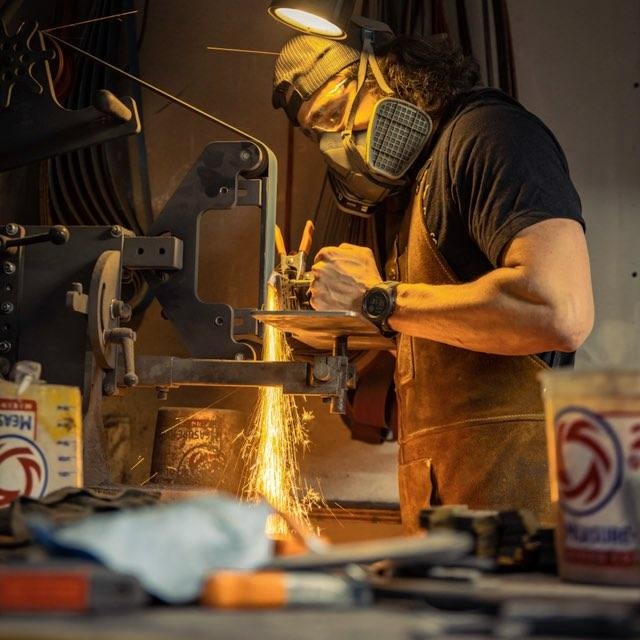
CNC machining, waterjet profiling, and laser measurement tools are now standard in high-end knife shops. However, what separates elite veteran-owned knives from mass production is the balance between technology and hand-finishing.
Stroup Knives represents this balance perfectly. Precision-machined blanks are hand-ground, hand-finished, and inspected by people who understand what failure looks like in the field.
Made in USA production allows for accountability at every step—something no offshore factory can replicate.
Why Veteran-Owned Knives Are Leading the Evolution
The reason veteran-owned knives are shaping combat knife technology in 2026 is simple: experience. These makers design with memory—of what broke, what slipped, what failed, and what saved lives.
Combat knife evolution isn’t driven by trends. It’s driven by consequences. Veteran-owned knives carry that weight into every design decision.
The Future of Combat Knives
Looking forward, combat knife technology will continue to evolve toward durability, adaptability, and purpose. Smart materials, improved coatings, and refined ergonomics will dominate—but only when guided by experience.
Made in USA veteran-owned knives will remain the gold standard because they answer to reality, not marketing departments.
Stroup Knives stands at the forefront of this evolution, proving that the future of combat blades is built by those who’ve lived the mission.