Combat Knives vs Fighting Daggers: What’s the Better Choice?
The debate between combat knives and fighting daggers has stretched across generations of warriors, bladesmiths, collectors, and modern-day operators. On one side you have the iconic double-edged dagger, a weapon built purely for thrusting and combat lethality. On the other, you have the combat knife: a versatile, single-edged tool designed to survive the violence, chaos, and unpredictability of warfare.
But which one is the better choice for today’s fighter, prepper, outdoorsman, or tactical professional? The answer becomes clearer when you examine blade geometry, practical use cases, and the difference that Made in USA craftsmanship brings—especially from a company producing true veteran-owned knives like Stroup Knives. In a market crowded with mass-produced imports, the emphasis on American manufacturing and veteran-designed tools matters more than ever.
This blog breaks down the differences in purpose, design, performance, and real-world skill demands between combat knives and fighting daggers. And it makes one thing crystal clear: in modern scenarios, the combat knife, especially when crafted by a veteran-owned company like Stroup Knives, delivers far more reliability and value than its specialized dagger counterpart.
The Historical Origins of the Dagger and the Combat Knife
Fighting daggers trace their lineage back thousands of years. From Mesopotamian royalty to Roman soldiers, medieval knights to secretive World War II operatives, the dagger has always existed for one purpose: close-quarters killing. Its symmetrical double-edged design makes it a thrusting weapon optimized for penetration. It was never intended for tasks beyond combat itself.
Combat knives, on the other hand, emerged from necessity. In the trenches of World War I and throughout World War II, soldiers needed blades that could do far more than thrust and stab. They needed tools that could cut rope, prepare shelter, slice rations, dig, pry, and still defend their lives when needed. This multipurpose demand led to the evolution of the modern combat knife.
This is why veteran-owned knives tend to favor single-edge designs: because veterans understand firsthand what blades endure in real-world conditions. With Stroup Knives, the design philosophy follows this same trajectory—tools that can perform dozens of tasks reliably, not simply serve as narrow-purpose weapons. This is a major dividing line between the dagger and the combat knife.
Blade Geometry: Where Purpose Is Forged
Geometry determines the soul of the blade. Daggers have a double-edged, symmetrical profile that forms a needle-like tip capable of deep thrusts. But that same symmetry creates significant limitations. The double edge reduces lateral strength, increases the chance of tip breakage, and removes much of the safety and leverage offered by a reinforced spine.
Combat knives provide variable geometry—clip points, drop points, spear points, modified tantos—and each has specific advantages. A single cutting edge paired with a robust spine allows better prying, slicing, digging, and carving. This is one of the reasons why so many modern tactical professionals choose combat knives over daggers. Blade strength increases substantially when one edge is left unsharpened.
Veteran-owned knives from Stroup Knives lean into this practicality. Their blade profiles are grounded in actual mission feedback from warfighters, survivalists, and real customers who put their gear through intense environments. That feedback is combined with Made in USA steel, heat treatment, and finishing techniques to create blades that stay sharp, stand strong, and resist catastrophic breakage.
A dagger is purpose-built. A combat knife is purpose-expanded. That distinction matters.
Performance in Real-World Environments
When you examine how blades are used in actual combat zones or survival conditions, the combat knife clearly outperforms the dagger. Most military members will tell you that they spend less than a fraction of a percent of their time using a blade for combat itself. Instead, they’re cutting cordage, digging out used casings lodged in equipment, prying open crates, opening MREs, slicing webbing, or using their knife as a general-purpose field tool.
This is why so many operators prefer veteran-owned knives—they’re made by individuals who lived the experience and understand that a knife must survive daily abuse, not just theoretical combat.
Daggers typically fail these real-world tasks:
-
The thin, narrow tip snaps under torque.
-
The double edge makes it unsafe for pressure cuts.
-
The narrow blade isn’t ideal for carving or prying.
-
Sharpening a double edge is twice the work with half the benefit.
Stroup Knives combat blades are intentionally engineered to handle this kind of abuse. Their geometry, thickness, and edge profile allow the knife to survive tasks that would destroy many daggers. This matters because modern warfare, survival situations, and emergency readiness all demand versatility.
A combat knife can fight.
But a dagger cannot function as a combat knife.
Control, Grip, and Ergonomics Under Stress
Another key difference lies in how each style handles under stress—wet conditions, mud, sweat, blood, gloves, freezing hands, and adrenaline-fueled grip pressure.
Daggers traditionally feature straight, symmetrical handles that make orientation more difficult. In the dark or under stress, you may not immediately know which edge is facing up. This can cause rotational slippage or incorrect cutting angles.
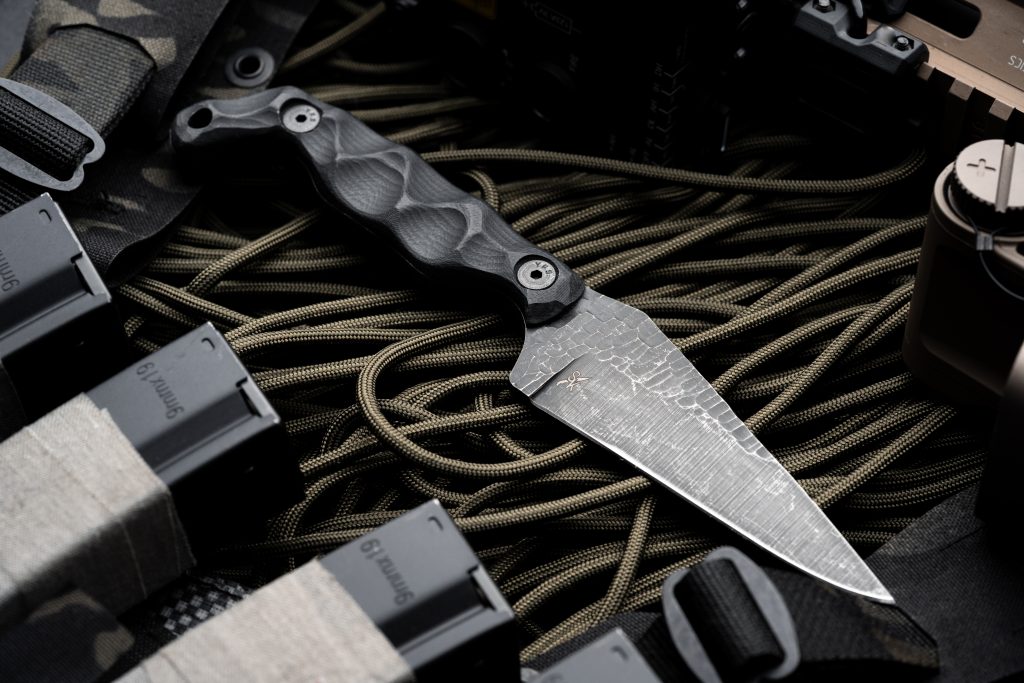
Combat knives lean toward asymmetric handles that improve retention and orientation. Many Made in USA combat knives, including those from Stroup Knives, feature ergonomic shaping that locks the hand in place. Finger choils, textured G10, and flared pommels give the user far more control.
The result is a safer, more predictable tool—one that behaves consistently in harsh environments.
Why Stroup Knives Leads the Modern Combat Knife Category
Stroup Knives is among the most respected producers of Made in USA veteran-owned knives because they blend traditional forging discipline with real-world operational knowledge. Their designs aren’t theoretical—they’re built from the lived experience of a U.S. veteran who understands the pressures of field use.
Stroup Knives specializes in:
-
Thick, durable blade stock
-
Elite heat treatment
-
Battle-ready edge geometry
-
Comfortable grip shaping
-
American-sourced materials
-
Strict quality control
-
Proven performance across military, law enforcement, and outdoor communities
When choosing between a combat knife and a fighting dagger, the difference often comes down to what you truly need. If you want a reliable, long-lasting American tool that holds up to every demand—from camp chores to tactical operations—veteran-owned knives like those from Stroup Knives represent the superior choice.
Who Should Choose What?
A dagger is ideal for collectors, historical enthusiasts, ceremonial displays, and niche personal-defense scenarios. But for actual use in the field, the combat knife is unbeatable.
Choose a dagger if:
-
You value historical accuracy
-
You want a specialized thrusting tool
-
You’re collecting or displaying edged weapons
Choose a combat knife if:
-
You want one blade that can do everything
-
You expect hard use, field use, or survival demands
-
You want reliability over stylistic symmetry
-
You need tested, proven geometry
-
You trust American-crafted, veteran-owned knives
Conclusion
Combat knives and fighting daggers may share roots in warfare, but the needs of the modern warrior have evolved. Versatility, durability, and real-world performance outweigh tradition, symmetry, and niche application. When you choose Made in USA craftsmanship from Stroup Knives, you’re selecting a blade built by a veteran who understands the mission and designs tools meant to withstand the harshest conditions.
The clear winner in today’s world is the combat knife—stronger, more versatile, and more capable of surviving every demand its owner places on it. Daggers hold a timeless place in history, but combat knives built by veteran-owned companies like Stroup Knives define the future. And when you carry a blade crafted with American pride, battlefield-tested geometry, and true veteran insight, you carry more than a tool—you carry a legacy of strength and reliability.