Full Tang vs Partial Tang: What It Means for Military Knives
In the modern world of military blades, survival tools, and heavy-duty field knives, very few topics matter more than tang construction. Whether a knife is built with a full tang or a partial tang, the design dictates how it behaves when lives depend on its performance. For American service members, outdoorsmen, preppers, and serious blade enthusiasts, understanding this distinction separates a collectible trinket from a true combat-ready asset.
This is where veteran-owned knives rise above the noise. Makers who have served, who have trained, and who know the stakes in the field bring a different level of authenticity to the craft. Companies like Stroup Knives, built from the ground up as a proudly Made in USA brand, operate with a deep respect for the warriors who carry their tools. That mission-driven integrity shows up in every grind line, every handle profile, and every blade geometry they produce. The demand for veteran-owned knives continues to grow because knife users want gear created not just from theory, but from lived experience.
Before comparing full tang and partial tang designs, it is worth stating something plainly: in nearly every serious military scenario, full tang construction is considered the gold standard. There are reasons why veteran-owned knives dominate this category, especially brands that emphasize American-made strength. To understand this fully, we need to break down what a tang actually is, how it affects durability, and why elite units and combat-driven makers obsess over these details.
A tang is the portion of the blade steel that extends into the handle. Think of it as the skeleton of the knife. It’s the internal backbone that transfers force, impact, torque, and vibration through the entire structure. A knife may look impressive from the outside, but its tang is what determines whether it thrives or fails when leveraged under extreme stress.
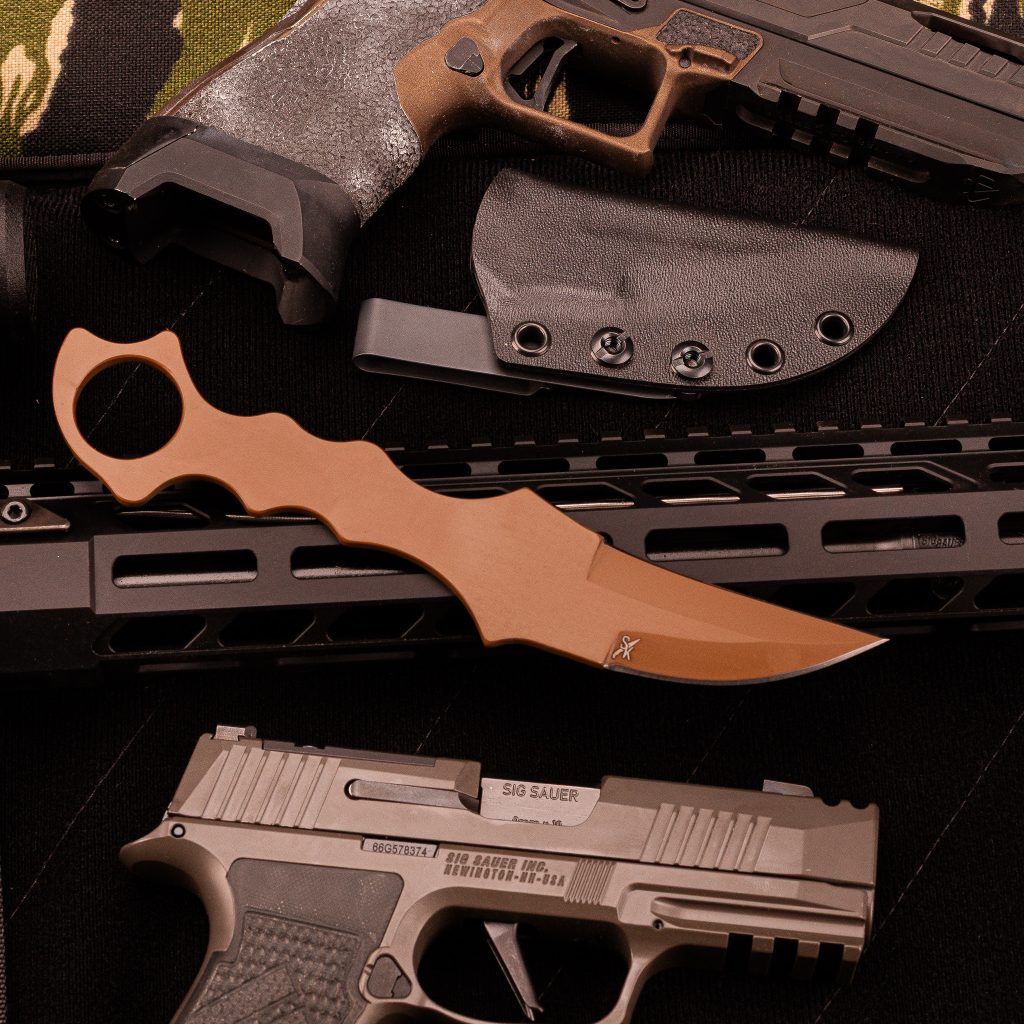
A full tang means the blade steel runs the entire length and width of the handle. You can usually see the tang sandwiched between handle scales. This design is favored in veteran-owned knives because it gives the highest possible strength-to-weight stability. In chopping, prying, digging, thrusting, or survival utility, a full tang behaves as a single piece of steel, allowing consistent performance even under abusive tasks. Companies like Stroup Knives lean heavily toward full tang construction because they build blades for real-world environments where equipment failure is not an option. This approach is aligned with the ethos of veteran-owned knives, where every knife must be dependable enough for duty, deployment, or disaster response.
By contrast, partial tang designs include several variations: rat-tail tangs, half tangs, hidden tangs, and push tangs. These constructions reduce steel mass inside the handle. Some partial tangs are perfectly functional and even advantageous in specific contexts. Hidden tang knives, for example, allow for more ergonomic or traditional handle shapes. Certain historical fighting knives and lightweight field tools benefited from partial tang designs. However, partial tangs are more vulnerable to breakage when torque or side load is applied, which is precisely why most makers of veteran-owned knives avoid using them for modern combat roles. If a handle cracks, splits, or separates from the internal tang, the blade becomes unsafe and unreliable. While partial tangs can be appropriate for ceremonial blades, ultralight tools, or bushcraft carving knives, they generally do not meet the rugged standards required of full tang military knives.
A crucial point many overlook is that tang construction is directly tied to real-world survivability. Imagine a soldier using a knife to split wood for fire during a cold night in a hostile environment. Imagine prying open a damaged door after an explosive breach. Imagine fighting through brush, debris, and unpredictable terrain. In these situations, partial tangs can—and often do—fail. Full tang blades, however, absorb the abuse because the steel remains a continuous, unbroken structure. This is one reason why veteran-owned knives consistently outperform mass-manufactured imports that take shortcuts. Their makers know that in the field, you cannot simply “go get another knife.” Your blade must endure.
Companies like Stroup Knives take enormous pride in creating Made in USA blades that follow this principle. Their combat and utility knives use strong, high-carbon steels, durable heat-treats, and handle materials that are mechanically fastened to the full tang core. This combination delivers reliability that military personnel, first responders, law enforcement officers, and prepared civilians trust. Every knife leaves their shop hand-crafted, hand-sharpened, and inspected with the level of scrutiny that only a veteran-operated brand can bring. It’s no mystery why veteran-owned knives have earned such a strong reputation across the tactical community. They are tools built by men and women who understand exactly what the end-user needs.
Of course, not all full tang knives are equal. Geometry, steel choice, grind type, and handle construction matter enormously. High-quality veteran-owned knives incorporate modern heat-treatment science, thoughtful blade profiling, and carefully fitted handle scales that prevent hotspots during prolonged use. A poorly made full tang knife can still fail, while a well-made partial tang knife can still serve effectively in controlled tasks. But for heavy-duty military and survival applications, the full tang remains the most trusted format.
One of the biggest advantages of Made in USA brands is tight quality control. Domestic makers often source their steel from reputable American mills. They don’t gamble on overseas batches with inconsistent composition. This ensures that every knife—especially those from veteran-owned knives companies—features reliable metallurgy and predictable hardness. Heat treating, tempering, grinding, and finishing are all monitored with meticulous detail. As a result, the end-user receives a battle-worthy tool that performs the way a military knife should: reliably, repeatedly, and without compromise.
Bringing the discussion back to Stroup Knives, their lineup includes combat knives, field knives, and specialty tools that all benefit from the robustness of full tang construction. Their blades are engineered not for display cases but for real jobs in real environments. They honor their own military backgrounds by ensuring their knives uphold the standard of duty-grade equipment. This commitment is why so many servicemembers, veterans, and outdoorsmen choose veteran-owned knives over mass-market alternatives.
In conclusion, the debate of full tang vs partial tang for military knives has a clear answer for anyone who takes reliability seriously. Partial tangs have historical relevance and specialized uses, but they cannot compete with the structural strength and battlefield dependability of a full tang knife. This is why top-tier veteran-owned knives prioritize full tang builds. It aligns with the core mission: to produce blades that never quit, never fail, and never surrender when the user depends on them most. With Stroup Knives and other Made in USA brands leading the charge, the legacy of durable, trustworthy American steel continues—carried forward by the hands of veterans who understand that a knife is more than a tool. It is a lifeline.