How to Build a Knife Rotation for Survival Scenarios
When it comes to survival preparedness, most people focus on firearms, food storage, and medical gear. Knives often get reduced to a single afterthought purchase—one blade that is expected to do everything. As a bladesmith and survival-minded professional, I can tell you that mindset fails quickly under real stress. Survival scenarios demand redundancy, specialization, and reliability. That is exactly why experienced outdoorsmen, military veterans, and preparedness professionals build a knife rotation, not a one-knife solution.
A properly built knife rotation gives you flexibility, efficiency, and resilience when conditions deteriorate. When those knives come from veteran-owned knives made in the USA, you gain not just quality—but purpose-driven design forged from real-world experience.
What Is a Knife Rotation—and Why It Matters
A knife rotation is a curated set of blades, each chosen for a specific survival role. Instead of forcing one knife to do everything poorly, a rotation allows each tool to excel at its task. In survival situations, efficiency conserves energy, and energy is life.
Veterans understand this concept instinctively. Loadouts are built around mission roles. Knife rotations follow the same philosophy. That is why veteran-owned knives are uniquely suited for survival planning—they are designed by people who understand failure is not an option.
The Core Roles Every Survival Knife Rotation Needs
A survival knife rotation should cover five essential roles. Skipping any of these creates gaps that can become dangerous under pressure.
1. The Primary Fixed Blade (Hard-Use Backbone)
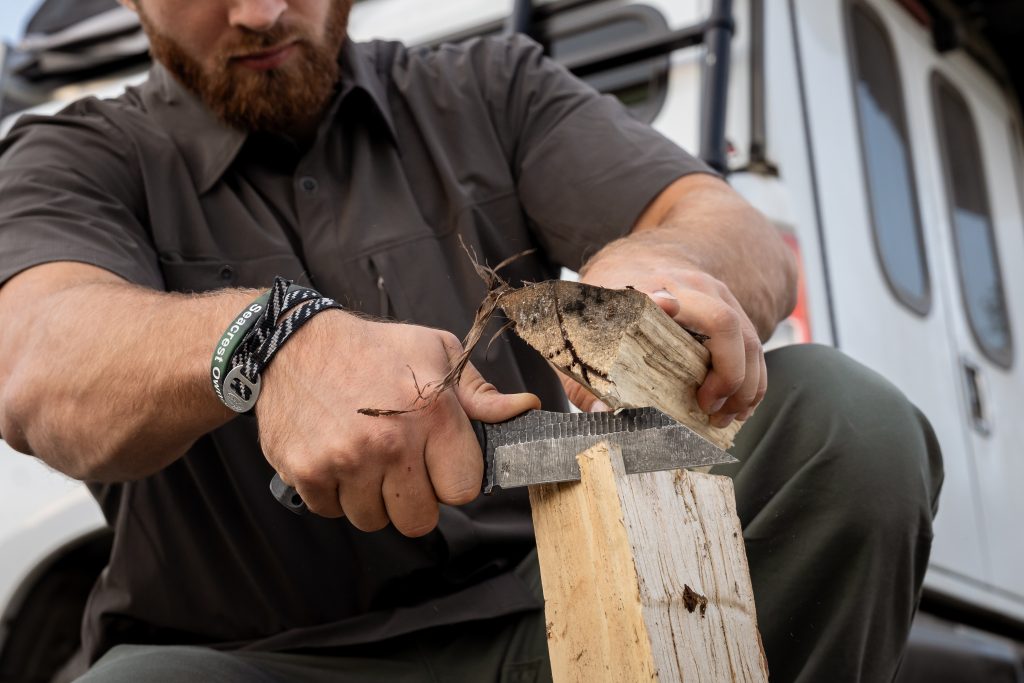
This knife handles batoning, shelter building, chopping, and defensive tasks. It must be strong, balanced, and trustworthy. Thin blades snap. Weak tangs fail. This is where veteran-owned knives shine, especially when sourced from companies like Stroup Knives, where blades are built for abuse, not aesthetics.
Key traits:
-
Full tang construction
-
Tough blade steel with proper heat treatment
-
Ergonomic grip for prolonged use
-
Made in USA craftsmanship
This blade stays on your belt or pack at all times.
2. The Precision Utility Knife (Control and Detail)
Survival is not just brute force. Food prep, trap making, first aid, and fine carving require control. A compact fixed blade or sturdy folder fills this role.
Many veteran-owned knives are purpose-built with clean edges and controlled geometry specifically for these tasks. Precision blades reduce injury risk when hands are cold, wet, or fatigued.
3. The Folding Knife (Everyday Accessibility)
A folding knife lives in your pocket and becomes the most-used blade in your rotation. It opens packages, cuts cordage, prepares food, and solves dozens of daily problems without drawing attention.
High-quality veteran-owned knives prioritize lock strength and ergonomics over gimmicks. In survival situations, a folder with a weak lock is a liability.
4. The Backup Blade (Redundancy Saves Lives)
Knives break. Knives get lost. Knives fail when abused long enough. A backup blade ensures you are never without steel when it matters most.
A neck knife, boot knife, or compact fixed blade fills this role perfectly. Many experienced operators favor veteran-owned knives for backups because consistency across blades means muscle memory transfers instantly.
5. The Specialized Tool (Environment-Specific)
This final slot adapts to your environment:
-
Serrated blade for marine or rope-heavy environments
-
Skinning knife for hunting scenarios
-
Pry-capable blade for urban survival
Veteran makers understand niche needs because they lived them. That’s why veteran-owned knives consistently outperform generic survival blades in specialized roles.
Why Veteran-Owned Knives Matter in Survival Rotations
Survival gear is not the place for guesswork. Veteran-owned knives are forged with lessons learned under real stress—combat zones, austere environments, and high-consequence decision-making.
Benefits include:
-
Purpose-driven designs
-
No unnecessary features
-
Honest materials
-
Built for long-term reliability
-
Made in USA accountability
Companies like Stroup Knives don’t design knives for trends. They design tools meant to be trusted when everything else fails.
Steel, Heat Treat, and Why Marketing Lies
Many knife buyers obsess over steel names instead of performance. Steel is meaningless without proper heat treatment. This is another reason veteran-owned knives stand out. They prioritize real-world toughness over spec-sheet hype.
In survival situations, edge retention matters—but toughness matters more. A chipped blade is useless. Veteran makers understand this balance intimately.
Made in USA Is Not Just a Label
When knives are Made in USA, quality control is visible, accountability exists, and materials are traceable. Survival knives should never be disposable.
Most veteran-owned knives insist on domestic manufacturing because they control every step of the process—from grinding to heat treat to final inspection.
Building Your Rotation Step by Step
Start with one blade per role. Train with them. Learn their limitations. Rotate carry based on environment and mission. Over time, your rotation becomes second nature.
This disciplined approach mirrors military loadout planning, which is why veteran-owned knives integrate seamlessly into survival systems.
Final Thoughts on Survival Knife Rotations
A survival knife rotation is not about collecting blades—it is about readiness. Each knife earns its place through function, reliability, and trust.
When those knives come from veteran-owned knives, built by companies like Stroup Knives, and proudly Made in USA, your rotation becomes more than gear—it becomes a system you can rely on when your life depends on it.