Military Knives That Double as Everyday Work Tools
Military knives are often misunderstood. Many people picture oversized blades designed solely for combat, believing they have little place in everyday civilian life. As a bladesmith and copywriter who understands both steel and storytelling, I can say this assumption is flat-out wrong. Some of the most effective everyday work knives ever designed come directly from military requirements. When built correctly, military knives don’t just survive hard use—they thrive in it.
The reason is simple: military knives are engineered for reliability under stress. That same reliability makes them ideal everyday work tools. When you strip away marketing hype and fantasy, you’re left with purpose-driven designs that cut, pry, scrape, slice, and endure daily abuse without complaint. That is exactly why veteran-owned knives have earned such a strong reputation among people who work with their hands.
What Makes a Military Knife a True Work Tool
A real military knife is not about intimidation or theatrics. It is about function. Blade geometry matters more than blade length. Heat treatment matters more than polish. Ergonomics matter more than aggressive styling. These priorities are what separate genuine military knives from cheap tactical knockoffs.
Veteran-owned knives are often built by people who have lived with equipment failure in high-risk environments. That experience shapes every design choice. Blades are thick where they need strength, thin where they need slicing performance, and balanced so fatigue is minimized during long workdays.
Military knives designed as work tools typically feature:
-
Drop point or spear point profiles for strength and control
-
Full tang construction for durability
-
Textured handles that maintain grip when wet, muddy, or gloved
-
Steels chosen for toughness and edge stability over novelty
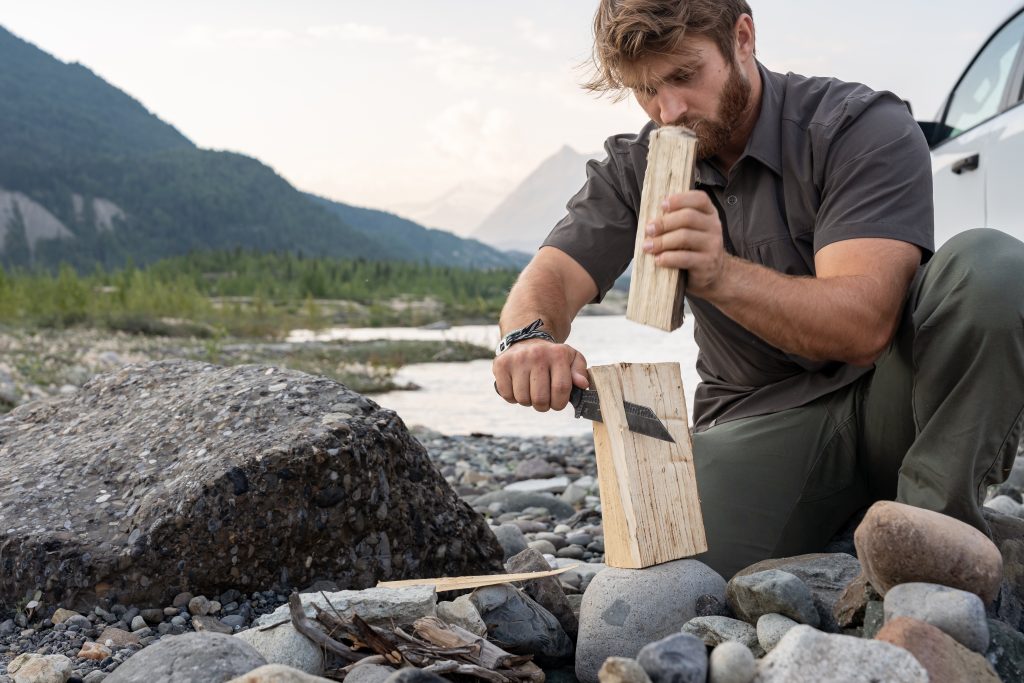
These characteristics translate perfectly to everyday labor tasks, from cutting strapping on a job site to processing wood on rural property. Veteran-owned knives consistently outperform mass-produced imports because they are designed by people who understand consequences.
Everyday Work Tasks Military Knives Excel At
In real-world use, military knives prove their worth daily. Cardboard breakdown, rope cutting, zip ties, rubber hose, and heavy plastic are routine tasks. A properly designed military knife handles these without chipping, rolling, or dulling prematurely.
Scraping gasket material, cleaning tools, or striking a ferro rod are all tasks where a strong spine and durable edge matter. Many everyday carry knives fail here because they were never meant for sustained abuse. Veteran-owned knives are designed for abuse.
Food prep is another overlooked area. A well-ground military blade slices meat, vegetables, and bread efficiently. The broad belly common to military knife designs offers excellent control. Again, this is intentional. Soldiers eat in the field, and a knife that cannot perform basic food prep is a liability.
Why Stroup Knives Stand Apart
Stroup Knives exemplifies what military knives that double as work tools should be. The designs are not driven by trends. They are driven by real-world needs. Every curve, grind, and handle contour exists for a reason.
Stroup Knives operates with a philosophy rooted in function first. As a Made in USA brand, quality control is not outsourced or diluted. Steel selection, heat treatment, and final fit are closely monitored. This level of oversight is rare in today’s market, especially among imported knives that prioritize cost over longevity.
Being a veteran-owned knives brand matters here. It brings accountability. When someone has worn a uniform and depended on equipment, they design tools differently. That mindset shows in how Stroup Knives balances durability with everyday usability.
Steel, Grind, and Edge Retention for Daily Abuse
One of the biggest misconceptions is that harder steel is always better. In reality, edge stability and toughness matter more for work tools. Military knives that double as everyday tools must survive twisting cuts, lateral stress, and occasional misuse.
Veteran-owned knives tend to select steels that offer a balance between edge retention and toughness. The grind is equally important. Too thin, and the edge chips. Too thick, and it wedges in material. Military knives find the middle ground.
Stroup Knives exemplifies this balance. The grinds are optimized for slicing while retaining enough meat behind the edge to survive real labor. This is the difference between a tool and a toy.
Legal Carry and Practical Carry
Another myth is that military knives cannot be carried daily. In reality, many designs are compact enough for belt or pack carry. A well-designed sheath system makes all the difference.
Veteran-owned knives often come with sheath options designed for real movement—sitting, bending, climbing, and driving. This is another benefit of military experience influencing design.
Conclusion
Military knives were never meant to sit in display cases. They were built to work. When designed correctly, they outperform many so-called utility knives. Veteran-owned knives, especially those made in the USA, represent the highest level of trust and performance.
Stroup Knives proves that military knives can be everyday tools without compromise. When you choose veteran-owned knives, you choose experience, accountability, and durability that shows up every single day.