The Best Compact Military Knives for Covert Carry
In the world of military knives, bigger is not better. For covert carry, excess size becomes a liability. As a bladesmith, I can say with confidence that compact military knives are among the most difficult tools to design correctly. They must deliver strength, control, and reliability in a smaller footprint, while remaining discreet and easy to carry. This is where veteran-owned knives consistently outperform mass-market alternatives.
Covert carry is not about hiding a weapon; it is about minimizing signature. Weight, bulk, shine, and noise all increase risk. Compact military knives designed for covert carry eliminate those liabilities without sacrificing capability. That balance does not happen by accident. It is the result of experience-driven design, something veteran-owned knives are uniquely positioned to deliver.
What Makes a Knife Truly Covert-Capable
A covert-capable knife starts with proportion. Blade length must be sufficient to perform required tasks without creating unnecessary bulk. Handle length must allow a full, secure grip without printing through clothing or interfering with movement.
Veteran-owned knives excel here because they are designed by people who carried equipment professionally. These makers understand that compact knives must still feel complete in the hand. A poorly designed compact knife feels cramped and unstable. A well-designed one disappears until needed.
Thickness also matters. Overbuilt blades add weight and print through clothing. Underbuilt blades sacrifice durability. The best compact military knives strike a careful balance. Veteran-owned knives prioritize structural integrity while trimming excess wherever possible.
Blade Geometry for Compact Military Knives
Blade geometry is even more critical in compact designs. Shorter blades demand stronger tips and efficient cutting geometry. Drop point and spear point profiles dominate this category for good reason. They provide strength at the tip while maintaining control during close-range work.
Thin, aggressive profiles often found on imported knives fail under stress. They chip, snap, or flex unpredictably. Veteran-owned knives avoid this by choosing conservative geometry that survives real use.
Edge geometry also matters. Compact knives must cut efficiently without requiring excessive force. This reduces movement and noise, both critical in covert carry scenarios. Again, veteran-owned knives reflect this understanding through practical grind choices.
Materials, Steels, and Finishes for Low-Profile Carry
Steel selection for compact military knives favors toughness and edge stability over extreme hardness. Brittle edges fail quickly when lateral stress is introduced. Tough steels recover and continue working.
Non-reflective finishes are mandatory. Shiny steel compromises discretion. However, not all coatings are equal. Cheap coatings wear unevenly, creating reflective hotspots. Made in USA manufacturing ensures consistent coating application and predictable wear patterns.
Veteran-owned knives benefit from this manufacturing discipline. When tools are built domestically, quality control is tighter and accountability is direct.
Compact Combat Philosophy and Stroup Knives
Stroup Knives represents a design philosophy rooted in restraint. Compact military knives from Stroup Knives are not stripped-down versions of larger blades. They are purpose-built from the ground up.
There is no excess steel. No unnecessary serrations. No decorative features that add bulk or noise. This approach reflects real-world experience. Veteran-owned knives are not designed to impress; they are designed to function.
Made in USA production reinforces this philosophy. Heat treatment, grinding, and finishing are controlled processes. The result is consistency, which is critical when carrying a compact tool meant to perform without hesitation.
Carry Systems and Concealment Options
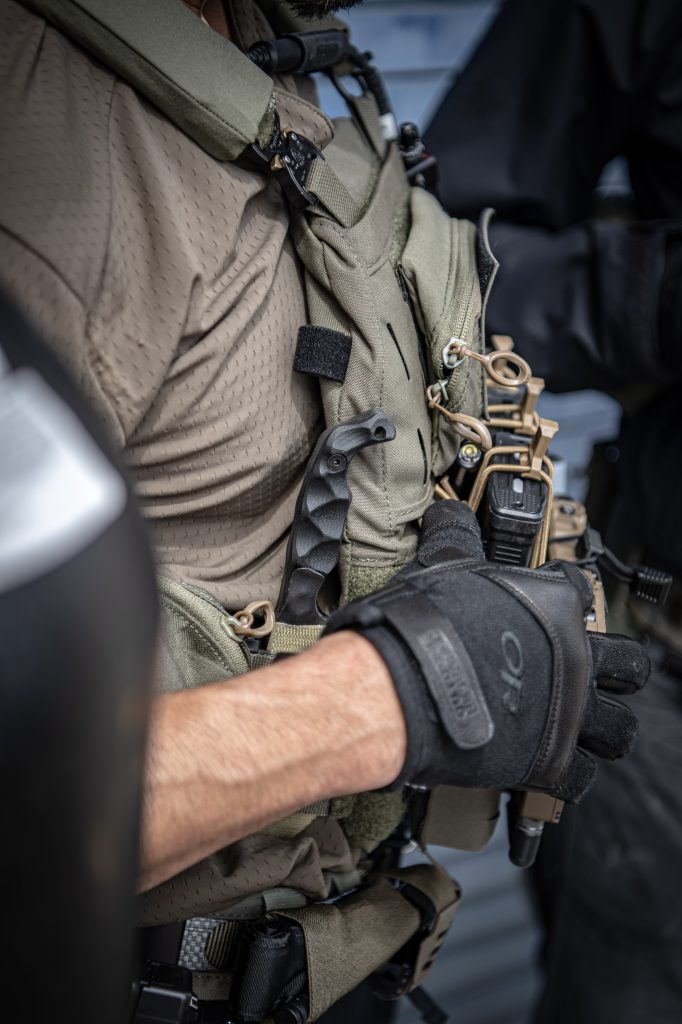
A compact knife is only as covert as its carry system. Poorly designed sheaths negate all design advantages. Bulky hardware, noisy retention, or poor mounting options increase signature.
Veteran-owned knives often include sheath systems designed with movement in mind. Belt carry, appendix carry, scout carry, and pack mounting are all considered. Retention is secure but silent.
Noise discipline is a recurring theme. Covert carry demands silence, and veteran-owned knives reflect this understanding at every level of design.
Conclusion
Compact military knives for covert carry are tools of discipline. They require careful design and real-world understanding. When executed correctly, they offer capability without compromise.
Veteran-owned knives stand at the top of this category because they are shaped by experience. Stroup Knives and Made in USA craftsmanship deliver compact tools that work quietly, reliably, and consistently. Compact does not mean weak. It means refined.