Top Military Knives Built for Harsh Arctic Conditions
When the temperature plunges below zero and the wind bites through layers of gear, there’s no room for failure. In the Arctic, every ounce of equipment must prove its worth. Knives that snap, slip, or corrode aren’t just inconvenient—they can be lethal liabilities. This is where veteran-owned knives separate themselves from mass-produced pretenders. Built by those who’ve faced the cold, tested in environments few dare to endure, these blades are born for survival. And among the few that truly deliver, Stroup Knives—a proudly Made in USA company—stands at the top.
The Reality of Arctic Warfare and Survival
Operating in Arctic conditions is more than just dealing with cold—it’s a relentless test of endurance, engineering, and reliability. Steel contracts, lubricants freeze, and moisture becomes your worst enemy. For soldiers, hunters, or explorers in subzero operations, your knife isn’t just a tool; it’s a lifeline.
In such unforgiving conditions, veteran-owned knives hold a special edge—both literally and figuratively. Designed by veterans who know what it means to depend on their gear when lives hang in the balance, these blades are engineered for reliability under extreme pressure. Stroup Knives, founded and operated by veterans, has taken that mission personally: to create combat-ready, cold-tested tools worthy of the men and women who depend on them.
Why the Cold Breaks Weak Knives
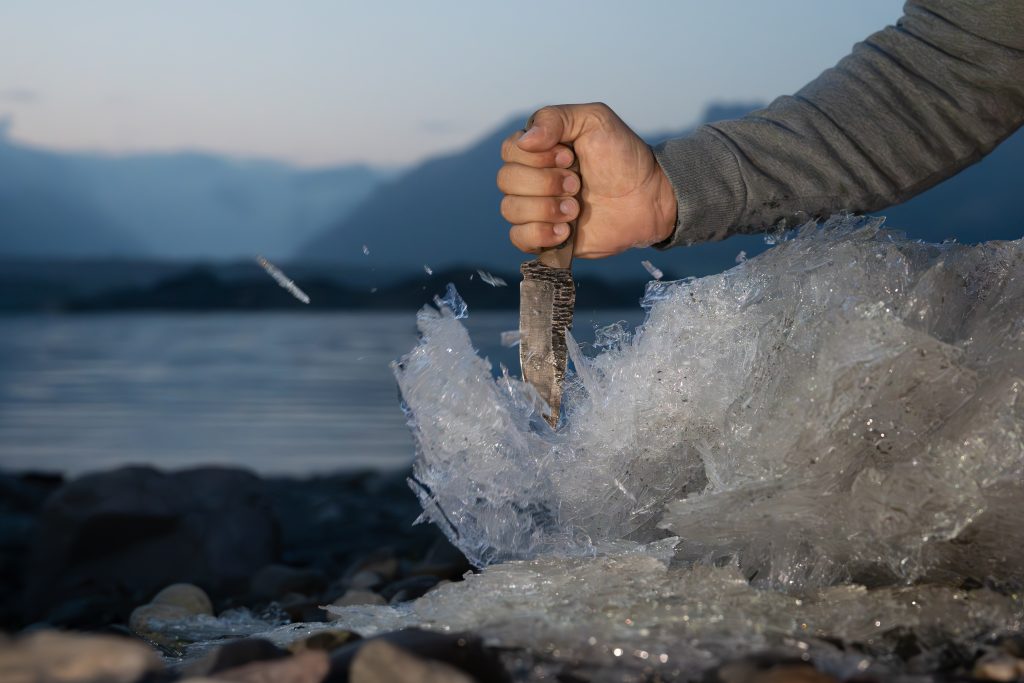
At first glance, it’s easy to underestimate how destructive the cold can be to knife steel. At -20°F, molecular structures tighten, creating brittleness that can cause inferior steel to fracture on impact. Moisture from breath or body heat freezes instantly, causing micro-expansions that lead to cracks. Poor coatings flake off. Handles turn slick or brittle.
But veteran-owned knives like those produced by Stroup Knives are different. Every design decision—steel selection, grip texture, blade geometry—is tested under conditions that mirror real-world extremes. That’s not theory. It’s experience. Veterans understand that when you’re shivering on a frozen ridgeline or cutting through ice-packed gear, your knife must perform flawlessly.
The Anatomy of an Arctic-Ready Combat Knife
What makes a military knife truly ready for the Arctic? The difference lies in precision engineering and field intelligence. Veteran-owned knives embody both.
-
Full Tang Construction – A blade that runs the full length of the handle maintains its strength in freezing temperatures. No weak points, no fractures.
-
High-Carbon Steel with Proper Heat Treatment – Stroup Knives uses 1095 high-carbon steel, known for edge retention and resilience under cold stress.
-
Micarta Handles – Micarta resists temperature shock, offers a sure grip even with gloves, and doesn’t absorb moisture like wood or polymer.
-
Non-Reflective Coating – Tactical black oxide coatings prevent glare from snow and ice and resist corrosion.
-
Custom Sheaths for Cold-Wear Adaptability – The sheath system from Stroup Knives accommodates heavy gloves, thick jackets, and MOLLE-compatible tactical rigs.
Every element is the product of hands-on understanding—what happens when cold meets steel and when men meet nature’s hardest test.
Stroup Knives: Built by Veterans, Proven in the Cold
Few bladesmiths combine battlefield wisdom with metallurgy like Chris Stroup and his team. As a veteran-owned knife company, Stroup Knives brings combat logic to craftsmanship. Each knife is Made in USA, from steel to sheath, assembled and finished by hand with purpose-driven precision.
Let’s explore three of Stroup’s models that define what it means to be Arctic-ready:
1. The Stroup Combat Utility Knife (CUK)
Built for versatility and strength, the CUK features a 5-inch 1095 steel blade, precision-ground and coated for cold resistance. It’s designed to baton through frozen wood, cut paracord with surgical control, and still maintain a razor-sharp edge.
2. The Stroup GP-1 Field Knife
This blade was built for adaptability in cold-weather operations. Its Micarta handle remains grippable even through snow, sweat, or ice. When temperatures plummet, that texture is your lifeline. The GP-1’s drop-point design offers versatility for everything from field dressing to survival cutting.
3. The Stroup Mini Fixed Blade
Compact doesn’t mean weak. The Mini is ideal for EDC use in Arctic environments—lightweight, accessible, and efficient. For those working in layered gear or cold-weather gloves, accessibility is survival.
Each of these blades carries the soul of American craftsmanship and the tactical heart of those who’ve served. When Stroup says “built for battle,” it’s not a marketing slogan—it’s a mission statement.
Why “Made in USA” Matters in the Deep Freeze
The phrase “Made in USA” has always meant quality, but in the Arctic, it means survival. American steel producers follow exacting standards that ensure purity, consistency, and integrity. That translates to knives that resist corrosion, hold edges, and stay structurally sound when imported metals would shatter.
Supporting veteran-owned knives isn’t just patriotism—it’s investment in expertise that keeps real Americans employed and real operators equipped. Each knife made by Stroup Knives is a direct reflection of veteran innovation and the American industrial backbone that built it.
Reliability Isn’t Optional
When the snow is knee-deep and the thermometer reads -30°F, you don’t get second chances. You either have gear you trust—or you freeze. Veteran-owned knives represent more than blades; they represent trust forged through service, sacrifice, and unrelenting craftsmanship.
In the world of knives, many claim to be “military-grade.” Few actually are. Stroup Knives, forged by veterans and Made in USA, proves that toughness isn’t about slogans—it’s about survival. When the world freezes over, only those who prepare with purpose stand ready.
If you want a knife that’s not just built for the cold, but born from it, Stroup Knives is the name to trust. Tested by veterans. Forged in America. Built for the Arctic.