A Short History of Issue Knives
Issue knives are interesting to anyone who makes knives, because they were designed under constraints most makers never face. Enormous quantities, unpredictable users, no maintenance to speak of, and every ounce accounted for.
What survived those constraints tends to be genuinely good design.
The trench knives
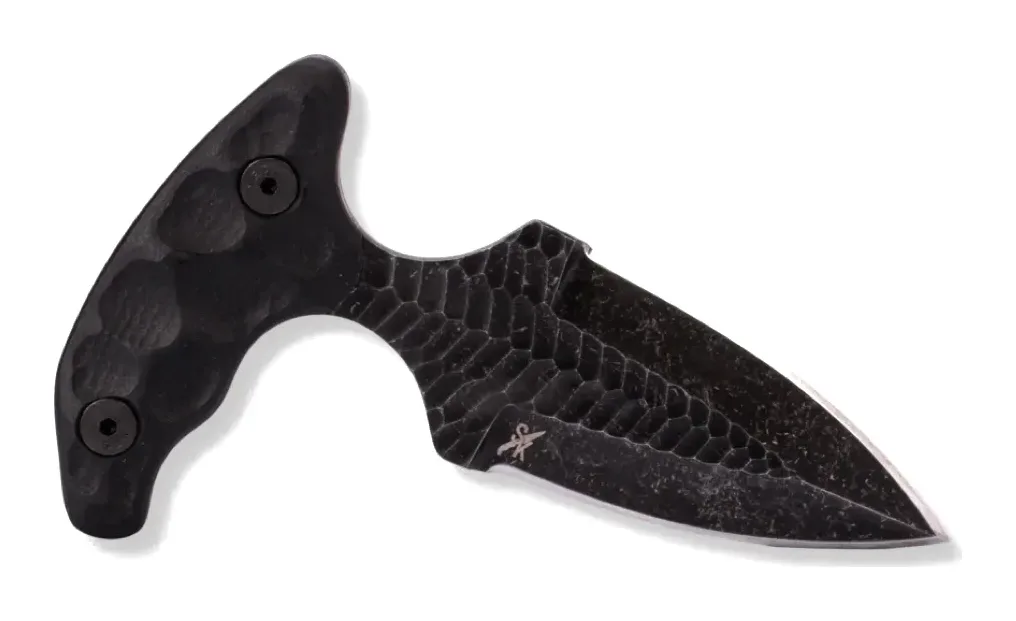
The First World War produced some of the strangest knives ever issued. Knuckle guards cast into the handle, triangular blades, spikes. They were purpose built for close quarters in a way that made them useless for anything else.
They are historically fascinating and they were a dead end. A knife that can only do one thing, in conditions that rarely arise, is dead weight the rest of the time. The lesson was learned quickly and the next generation went the other way.
The 1940s general purpose pattern
The knives issued in the Second World War are the ancestors of most American fixed blades made since.
The shape is familiar: a seven inch clip point blade, a stacked leather washer handle, a simple crossguard, a pommel you could hit things with. Simple carbon steel, usually 1095, because it was cheap, it sharpened on anything, and it could be heat treated in volume reliably.
They were general purpose tools, and that is the part that matters. They opened ration crates, cut parachute cord, dug, hammered, prepared food, and occasionally did harder jobs. The design assumption was that one knife would do everything, because that is all anyone was carrying.
That assumption produced a shape with real belly for cutting, a point strong enough to abuse, and a grind that worked on wood and food alike. It is why that outline still looks right eighty years later.
What changed in the 1980s
Two things, mostly.
Materials got better. Synthetic handle materials that did not swell, shrink, rot or get slippery. Stainless steels that could actually hold an edge, which earlier ones could not. Coatings that resisted salt.
Requirements got more specific. Different roles wanted different knives rather than one pattern for everyone.
The general purpose blade stayed, but it got shorter. Five inches instead of seven. The realisation was that the longer blade had been inherited from an era of different tasks, and most of what people actually did with a knife happened in the first four inches of edge.
What modern outdoor knives took from all of it
The drop point. Tip below the spine line, strong, good belly, hard to accidentally puncture something underneath what you are cutting. It became the default shape for hunting knives because it is the best compromise anyone has found.
Full tang construction. Once the standard answer to "how do we stop these breaking", now the baseline expectation for any working knife.
Simple carbon steel, taken seriously. 1095 was chosen originally because it was economical and forgiving at scale. It stayed in use because a blade you can sharpen on a rock has a real advantage over one you cannot, and that advantage does not go away with better technology.
Grip materials that work wet. G10 and canvas micarta both came into general use through this lineage, and they are now on everything from fillet knives to chef's knives.
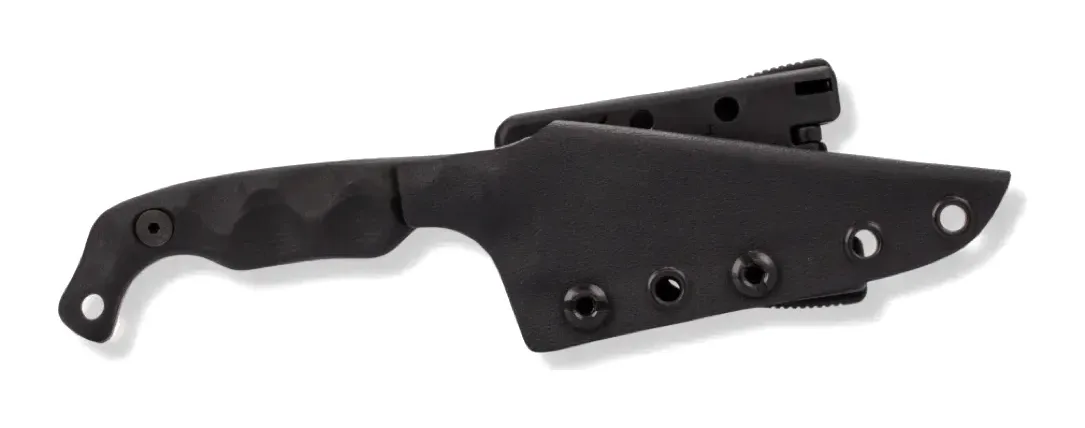
Sheaths that retain and drain. Kydex replaced leather for carry because leather holds water against steel, which is a problem that took a surprisingly long time to be taken seriously.
What got left behind
Hollow handles. A compartment built into the tang, which is exactly where a knife needs to be solid. Popular for about a decade and structurally indefensible.
Saw backs. They compromise the spine, they cannot be struck, and they saw badly. Almost every serious maker dropped them.
Massive blades. Length kept shrinking because people kept finding they did not use it.
Knuckle guards. Gone for the same reason they appeared and vanished the first time.
The thread running through it
Every generation of issue knife started from the same question: what will one person carry, use for everything, and not look after properly?
That is a surprisingly good design brief. It filters out anything clever, anything fragile and anything that only works when conditions are right.
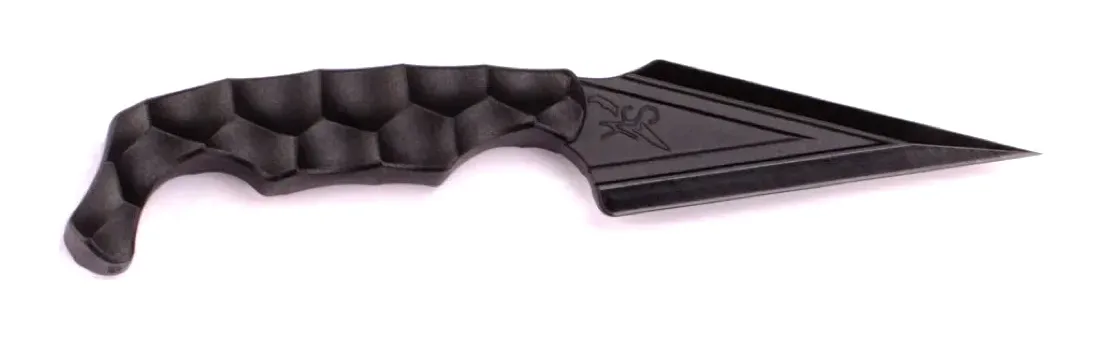
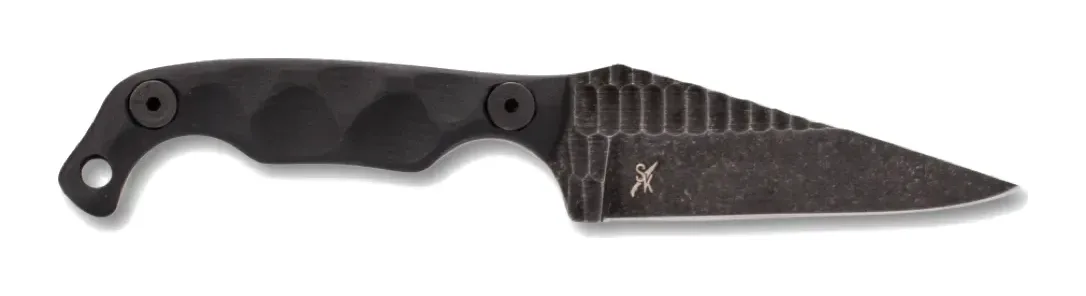
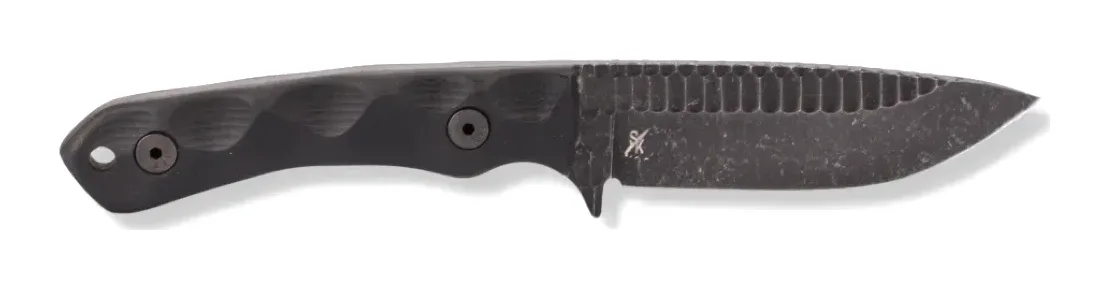
The knives we make are general purpose fixed blades in that tradition. Four inches of belly, 1095 at 58 to 59 HRC, full tang, flat ground, Kydex. Not because of any association, but because that set of answers has been tested harder than anything else in knifemaking and it keeps coming out the same way.