Made by hand. One shop in North Carolina.
Every Stroup knife follows the same path from raw steel to a sharpened edge in a hand molded Kydex sheath. Here's every stop, in order.
From steel to shipped.
Each order gets a work order that travels with the knife. It gets checked off at every station, so we always know where your knife is.
- 01
Order received
Station / OfficeYour order becomes a work order: model, finish, handle, sheath. It rides with the knife from here to your door.
- 02
Steel cut to order
Station / SteelThe 1095 high carbon steel for your model is pulled for the order. Thickness is set by the model, from 5/32" to 1/4".
- 03
Profile cut
Station / ProfileThe full outline of the knife, blade and tang together, in one piece. Full tang means one piece of steel from tip to butt.
- 04
Grind
Station / Belt grinderThe bevels go on by hand at the belt grinder. This is where a flat blank becomes a knife.
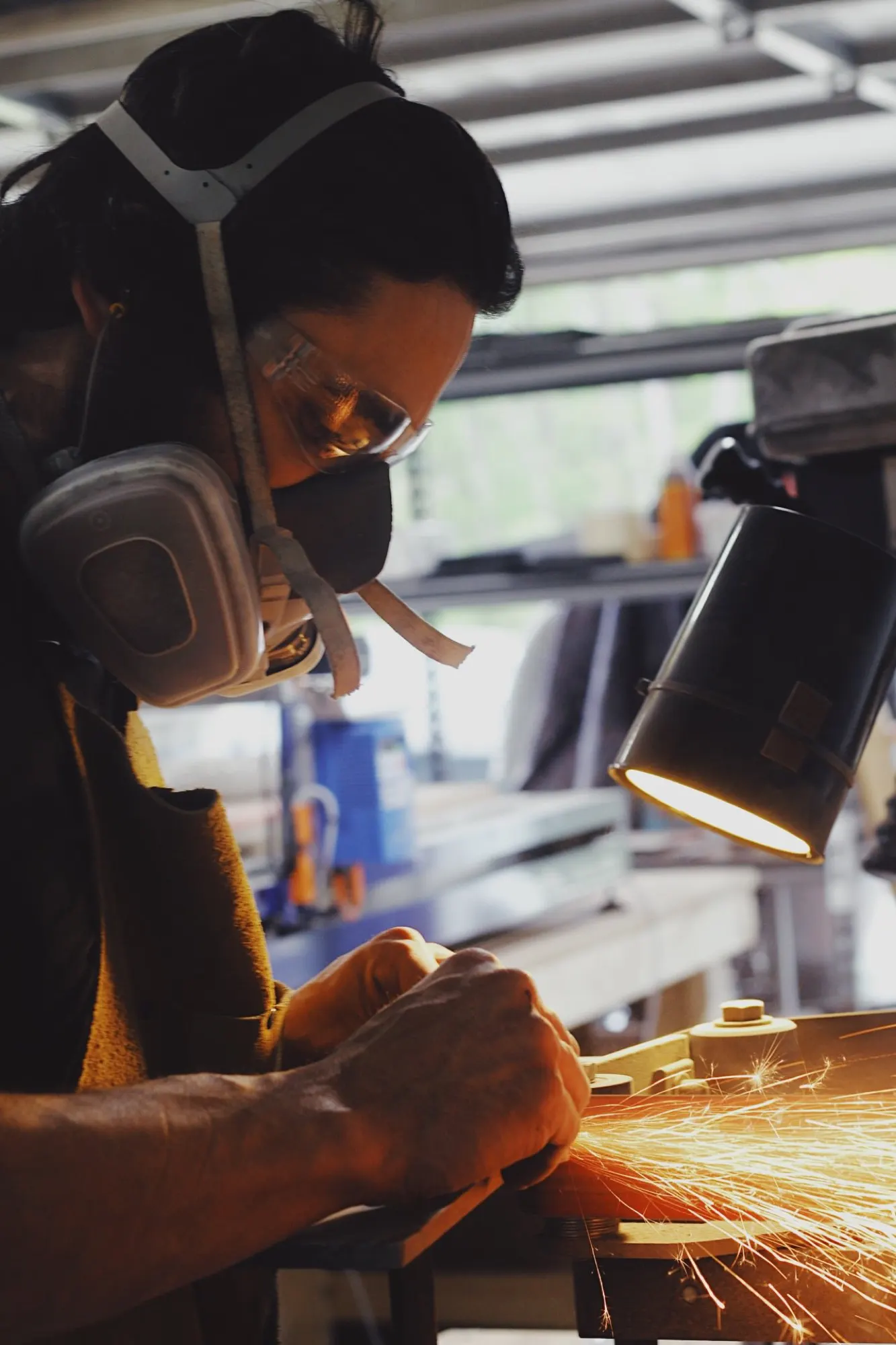
Grinding bevels by hand - 05
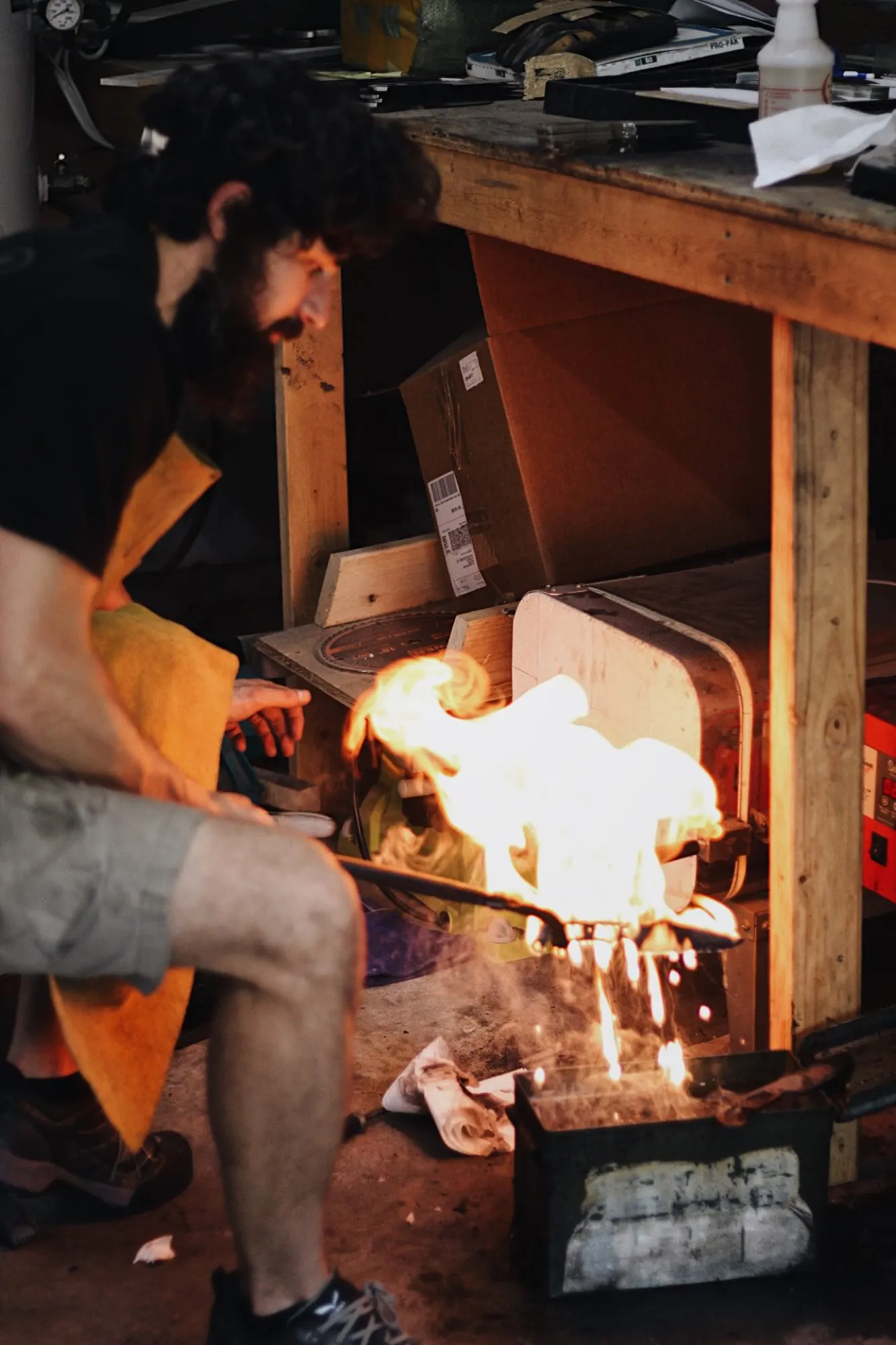
Heat treat
Station / ForgeThe blade is hardened, then tempered to 58-59 HRC. Hard enough to hold an edge through real work, tough enough not to chip when it hits something it shouldn’t.
Heat treating in the Stroup shop - 06
Post heat treat finish grind
Station / Belt grinderScale from the heat treat comes off. Then the blade gets its finish: acid etched, which leaves a dark stonewashed surface, or Cerakote, a coating baked onto the blade.
- 07
Handle prep
Station / DrillThe tang is drilled for the scale fasteners and the lanyard hole.
- 08
Scales attached
Station / BenchG10 or Honduran rosewood scales are fitted and fastened through the tang.
- 09
Sharpen
Station / BenchThe edge is put on by hand.
- 10
Etch or engrave
Station / EtchThe SK mark goes on the blade. Unit orders can get an operator number engraved on the spine here.
- 11
QC
Station / InspectionEvery knife is checked before it goes any further.
- 12
Pack
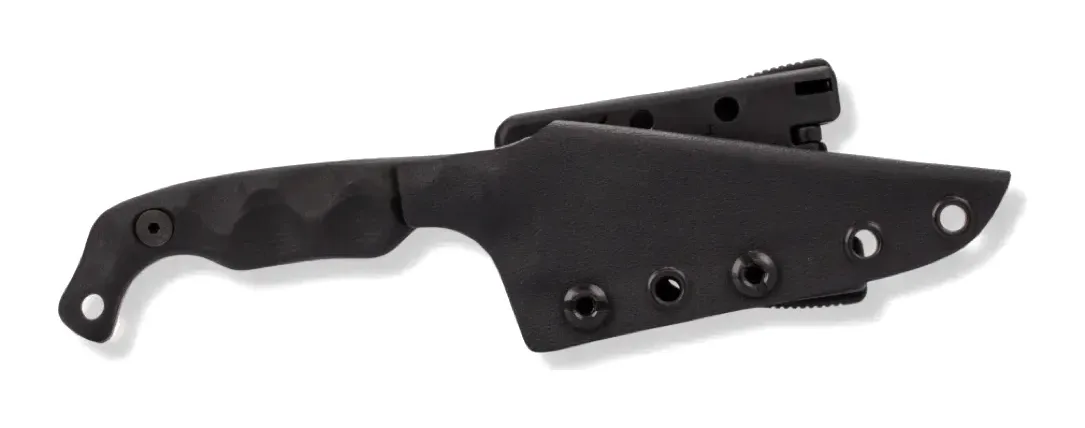
Station / KydexThe knife goes into a Kydex sheath hand molded to that model, with a Tek-Lok belt clip.
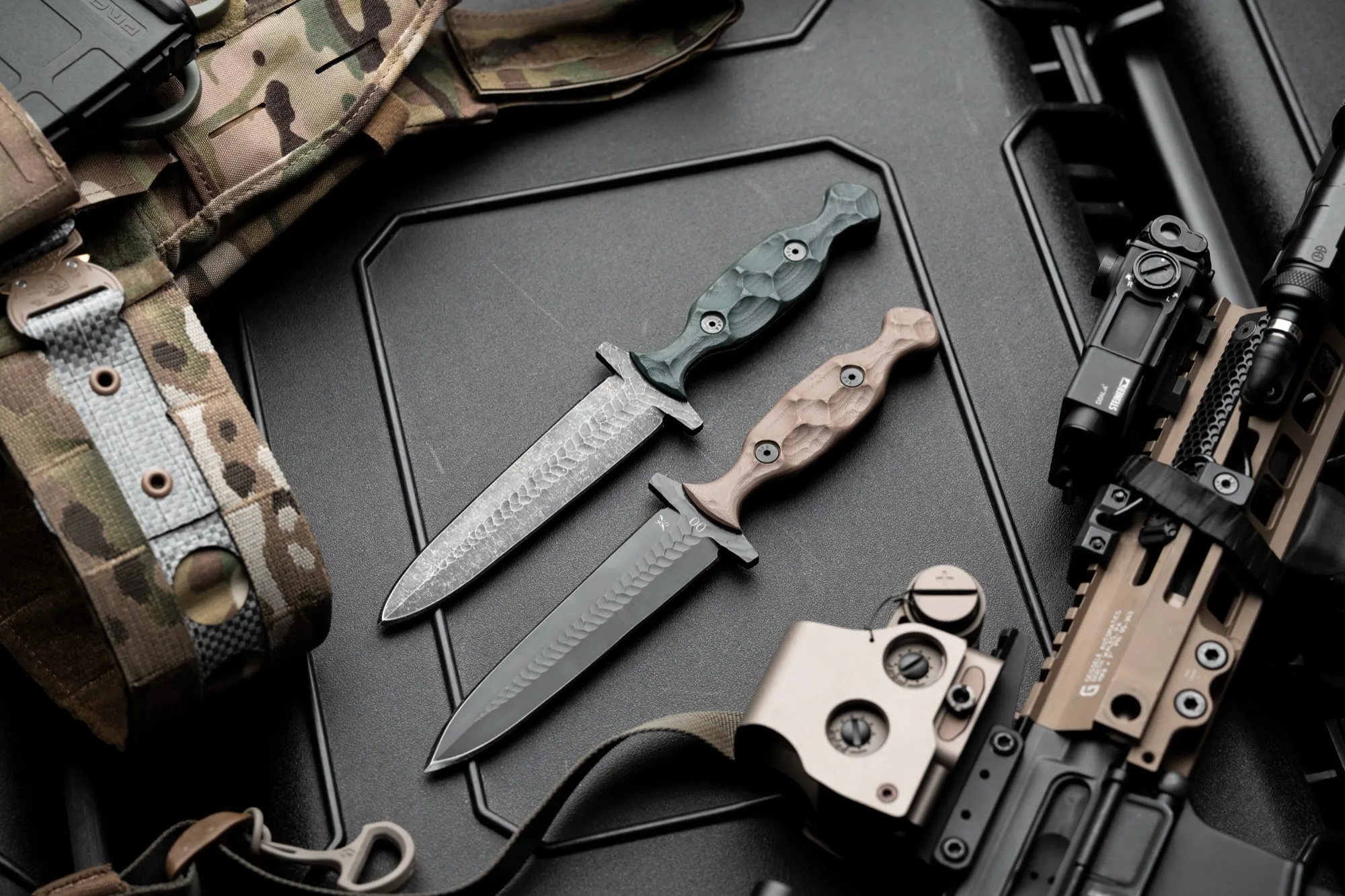
Finished knives and sheaths - 13
Ready to ship
Station / ShippingIt ships with tracking. The work order closes, and the knife goes to work.
Materials, and why we use them.
1095 high carbon steel
A plain carbon steel that takes a very sharp edge and is easy to bring back in the field. Every blade is hardened and tempered to 58-59 HRC. Thickness runs from 5/32" on the Mini and GP line to 3/16" on the TU line, and 3/8" on the hawks.
G10, rosewood, nitrile
G10 is a fiberglass laminate that doesn't care about water, sweat or cold. Honduran rosewood is there for people who want wood in the hand. The MK2 uses nitrile for grip when it's wet.
Kydex and Tek-Lok
Every knife ships in a Kydex sheath hand molded to that model, with a Blade Tech Tek-Lok belt clip you can set vertical or horizontal.
Acid etched or Cerakoted.
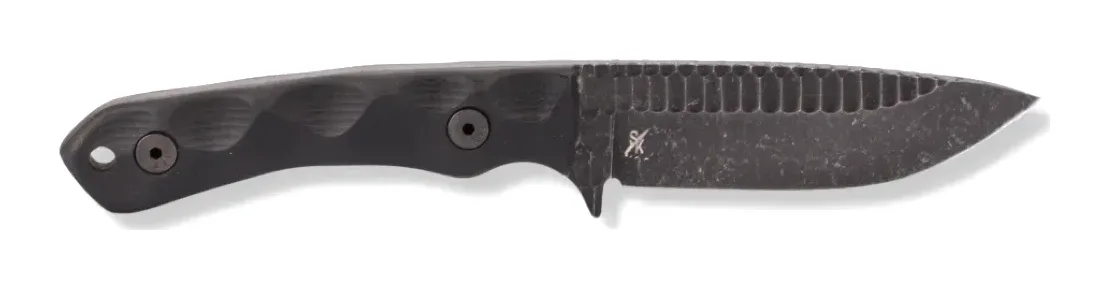
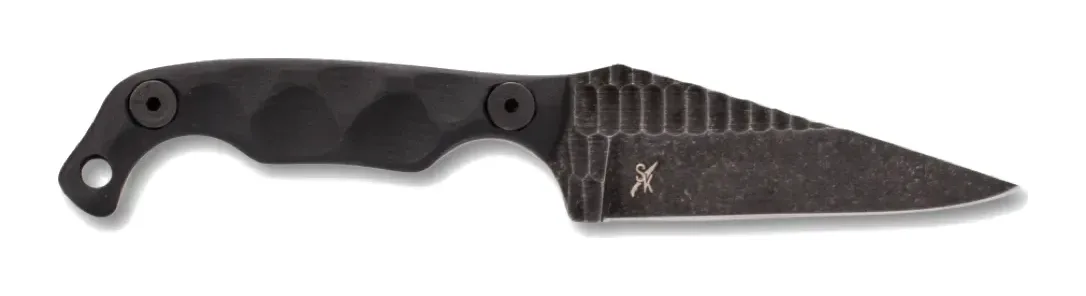
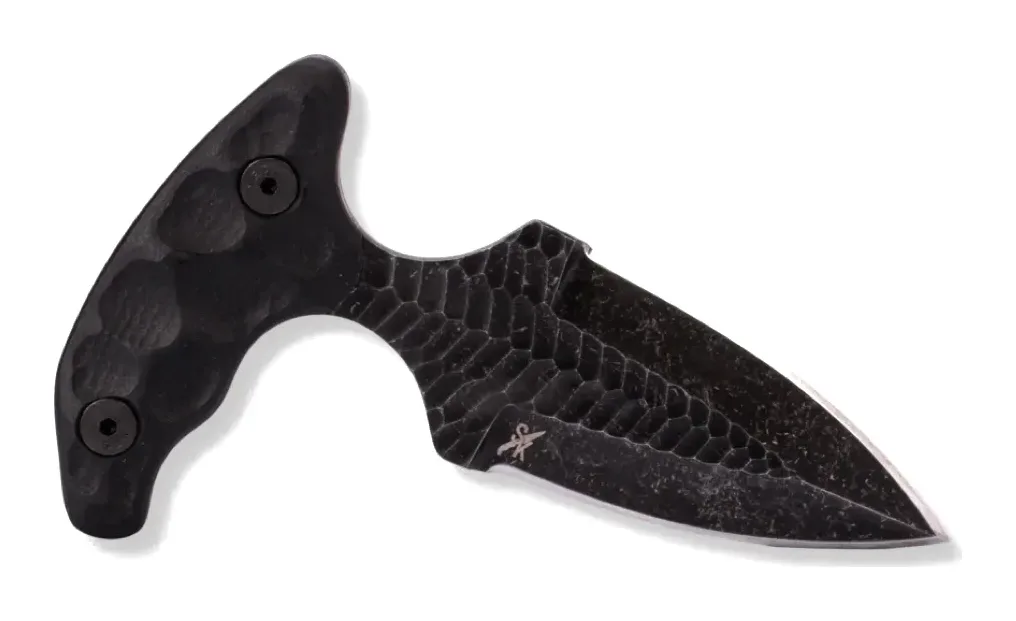
Acid etched
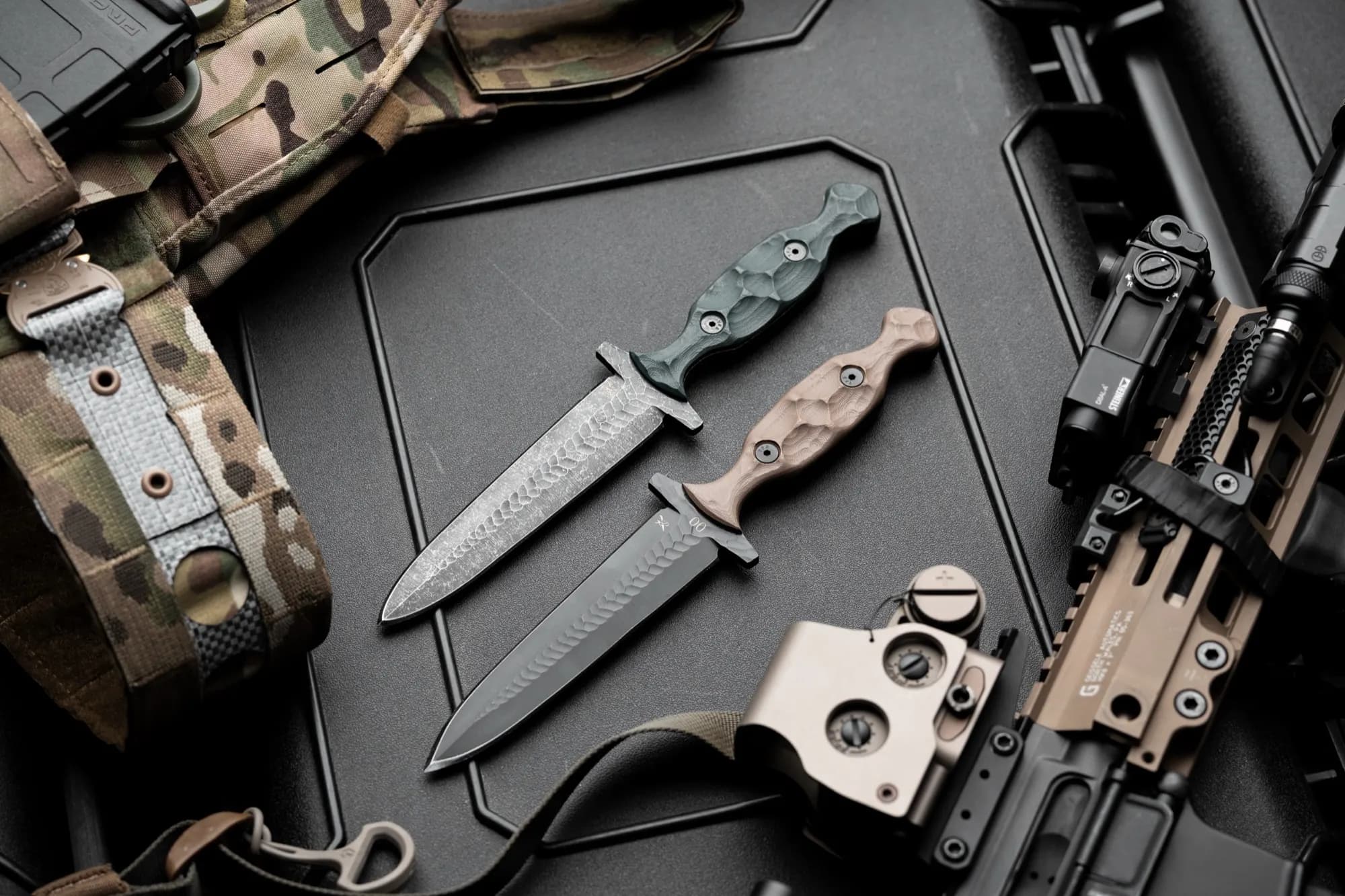
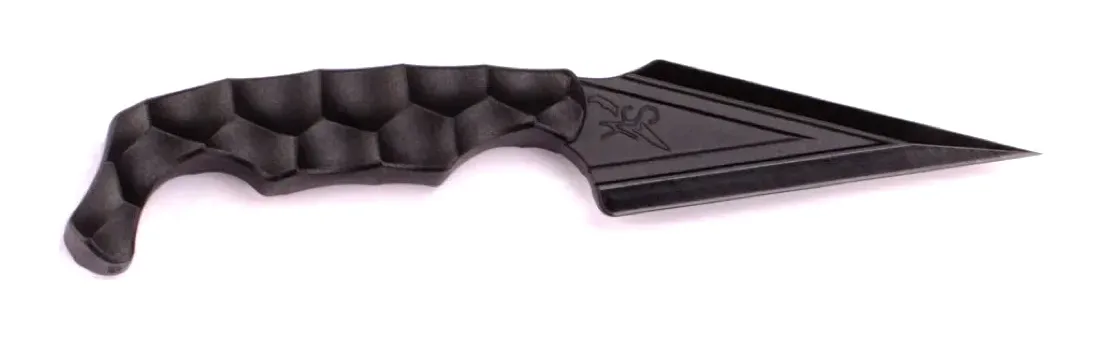
The blade goes into an acid bath that darkens and textures the steel. It hides scratches well and wears in with use. Paired with G10 or wood handles in black, OD green, FDE, camo and more.
Shown: GP2, Black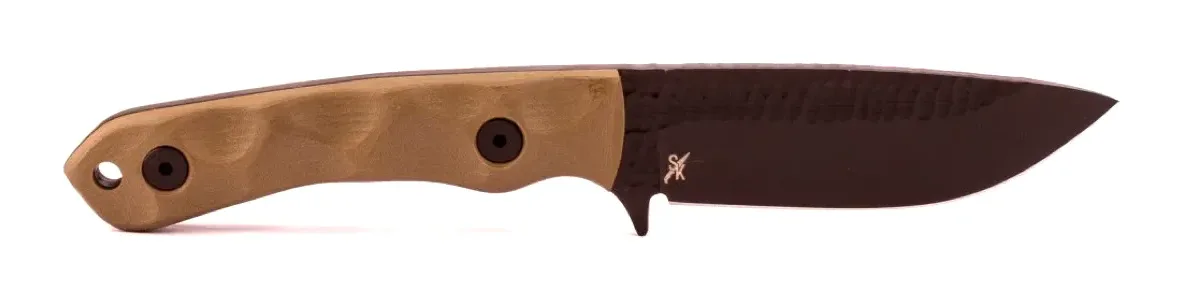
Cerakoted
Cerakote is sprayed on and baked. It adds corrosion resistance and a flat, even color. Offered in black and FDE blades with contrasting handles.
Shown: GP2, OD/BlackCarbon steel wants a little care.
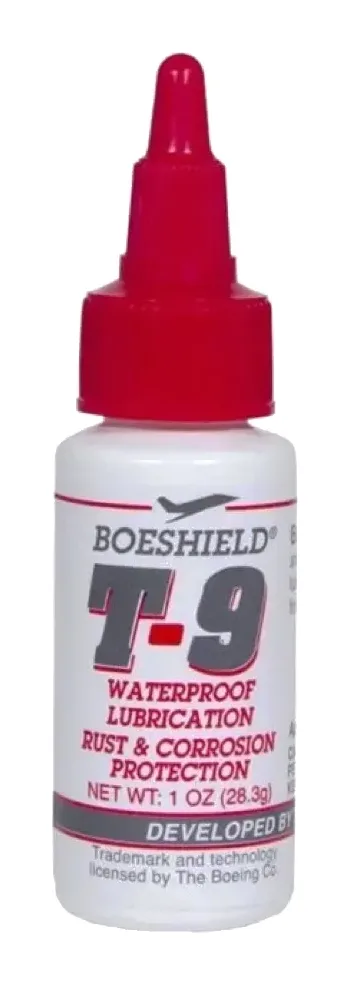
1095 will pick up a patina with use, and it will rust if it's put away wet. Wipe it dry, put a drop of oil on it now and then, and it'll keep working for life.