Bushcraft and Shelter Building: What the Blade Has to Do
Most knife tasks are cutting. Bushcraft is mostly not. It is splitting, notching, scraping and levering, and those put load on a blade in directions that slicing never does.
A knife that is excellent in a kitchen can be a poor choice against a log.
The four jobs
Batoning. Driving the blade through a round of wood by striking the spine with a stick, to split it and get at dry wood inside. This is the one that breaks knives.
Notching. Cutting shallow V notches and flat seats so poles sit together without sliding. Shelter frames live or die on notches.
Feather sticks. Shaving long curls that stay attached, so you have fine tinder from wet wood. The purest test of how sharp a knife is and how well it is ground.
Scraping. Taking bark off, making tinder dust, throwing sparks off a ferro rod with a square spine.
What the knife needs
A spine you can hit. Flat, square, no rounding, no saw teeth, no jimping where the baton lands. Rounded spines ruin batons and will not scrape a ferro rod.
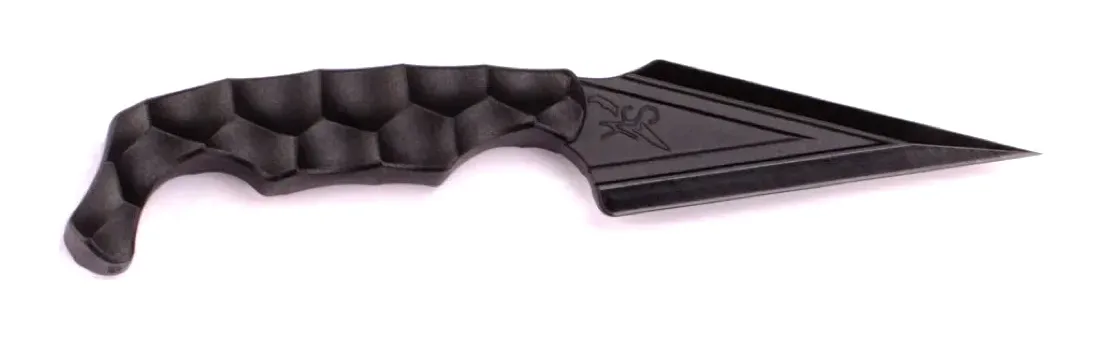
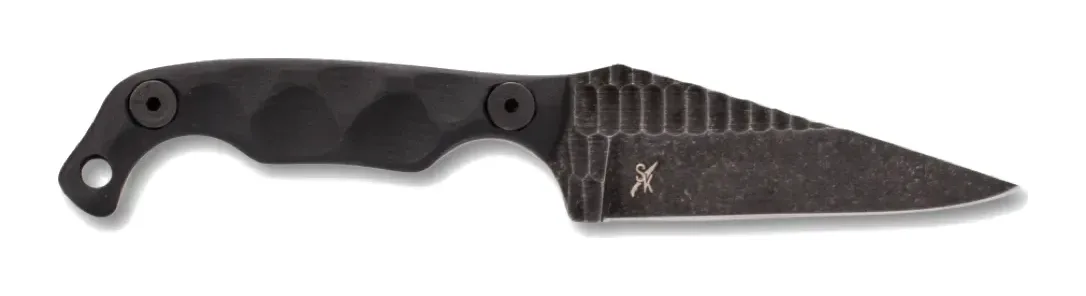
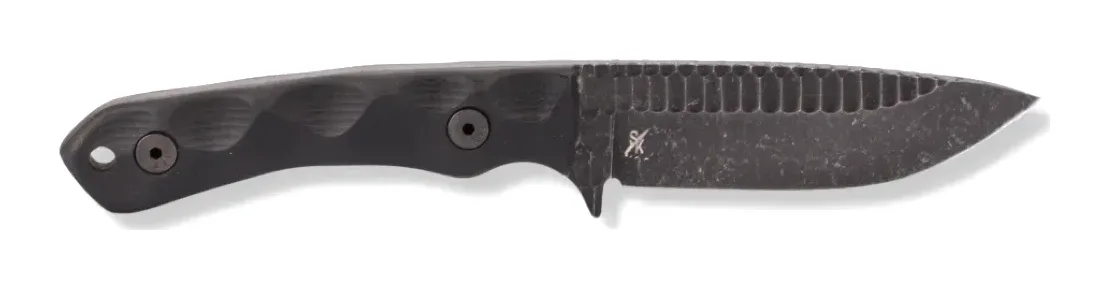
Thickness, within reason. 5/32 to 3/16 of an inch. Thinner splits better but flexes under a baton. Thicker takes the hammering and cuts worse. Our TU series at 3/16 is at the hard use end of this, and the GP series at 5/32 is the one that still food preps well afterwards.
Full tang. Non negotiable for wood work. Every baton strike is a shock load. A partial tang is a break waiting for a cold morning.
Length. Four to five inches. The blade has to be longer than the wood is wide or batoning does not work. Four inches splits wrist thick rounds comfortably.
A grind that does not bind. Flat or convex. A convex edge is strong behind the apex and pops out of a split instead of wedging. Scandi grinds are the traditional bushcraft answer and are superb on wood and mediocre at everything else.
A handle that survives being hit. Smooth enough not to raise blisters over an hour of carving, grippy enough when wet. G10 does both.
How to baton without wrecking the knife
Set the round on something solid. Place the edge across the grain, not into a knot. Strike the spine over the wood, not over the overhang past the far edge, which is where you lever the tip off.
Work the blade through rather than trying to split it in one. If the wood is not giving, move off the knot or pick another round. Knots break knives more than batoning does.
Never baton into the tip. Never twist the blade to pop a split, use a wedge. Never baton a partial tang knife at all.
Notching
Three cuts. A stop cut straight down to the depth you want, then angled cuts into it from either side to lift the chip out. Repeat, going deeper, rather than trying to hog it out in one.
A knife with a sharp tip and real control at the choil is worth more here than raw size. Choking up with a thumb on the spine is how most notching actually happens, which is an argument for a handle you can get your hand forward on.
Feather sticks
Find a dry, straight, knot free piece. Hold it against a solid surface, set the edge at a shallow angle, and push with long steady pressure, stopping short of taking the curl off.
If your curls keep detaching, the edge is dull or your angle is too steep. If you cannot get a curl at all, the knife is not sharp. Feather sticks are the honest test.
What does not help
Hollow handles. A compartment is a weak point in the one place you cannot afford one.
Saw backs. They ruin the spine for batoning and ferro rods, and they saw badly.
Serrations. No use on wood, awful to sharpen.
Huge blades. Past about six inches you have a chopper that notches poorly. If you want to chop, carry an axe or a tomahawk, which does it better than any knife.
The realistic kit
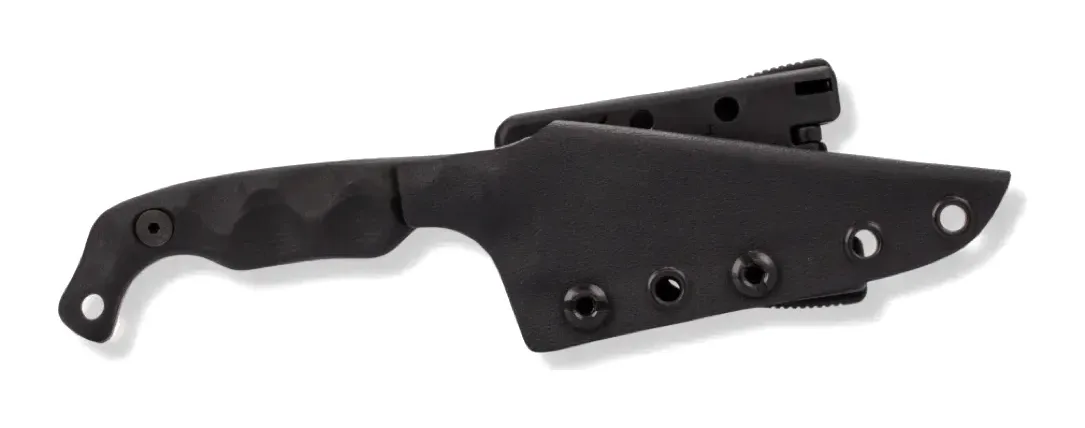
A four to five inch fixed blade, 5/32 to 3/16 at the spine, square spine, full tang, flat or convex grind, G10 handle, Kydex sheath.
Add a folding saw, which outperforms a knife at every cross grain cut and weighs almost nothing. Add a ferro rod. Add a small stone.
That is a kit that will build a shelter, make fire from wet wood, and still cut your lunch.
Our tomahawks handle the chopping end of this, and the comparison page covers the knives.