Choosing a Hunting Knife for Big Game
The first thing to say is that hunting knives are mostly oversized. A great deal of marketing has gone into selling people big blades for a job that rewards control.
You can break down an elk with four inches of well shaped steel. People do it every season.
Belly does the work
The belly is the curved section of edge between the straight part and the tip. It is the part that does almost all of the cutting when you are skinning.
A knife with good belly lets you work with the curve, sweeping along under the hide, instead of poking at it with the tip. Less effort, fewer holes in the hide, less chance of going through into the gut.
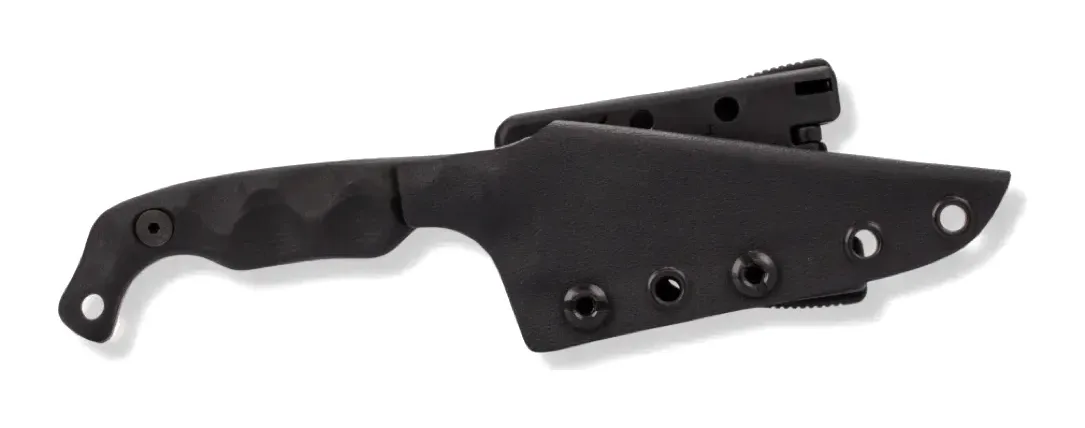
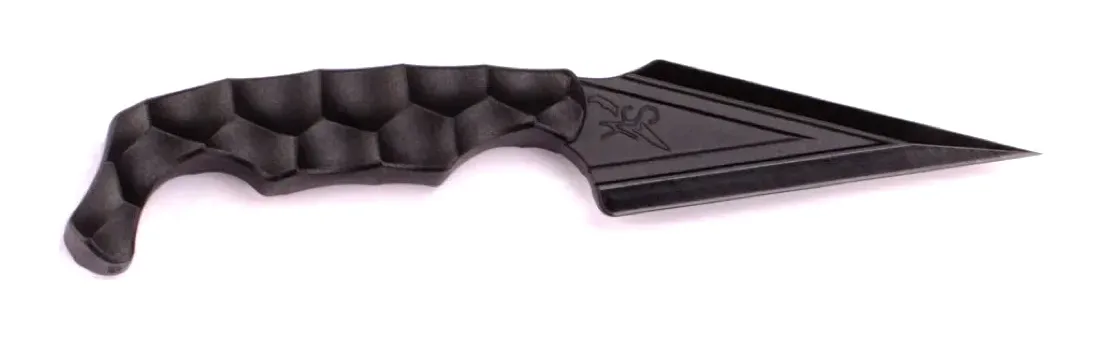
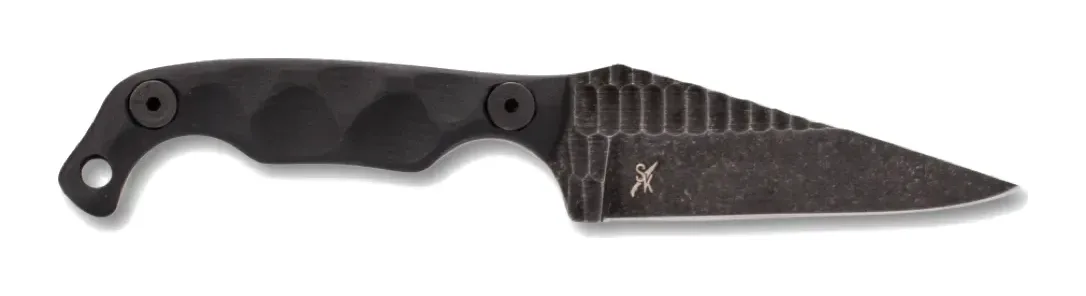
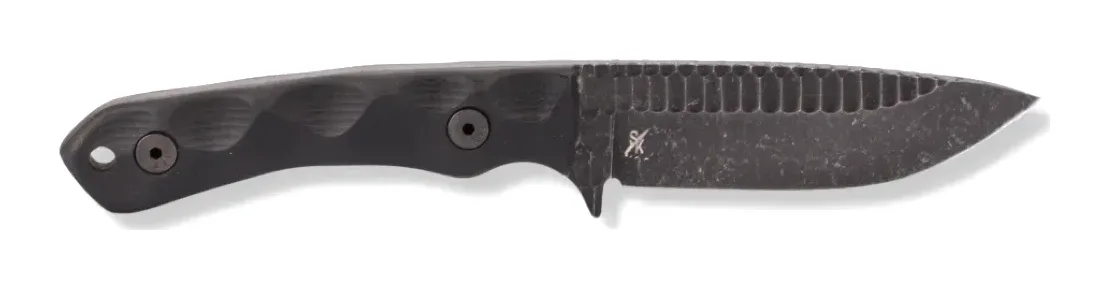
This is why a drop point with a generous belly outperforms a longer knife with a straight edge at this job. Our GP1 is a four inch blade built around exactly that curve, which is also why it has stayed the one we are known for.
Length, honestly
3 to 4 inches handles deer and hogs comfortably and is easier to control in tight work around the pelvis and diaphragm.
4 to 5 inches gives you more edge for long skinning strokes on elk, moose and bear. The extra reach genuinely helps on a big animal.
Over 5 inches starts working against you. Harder to control, more knife than the cut needs, and more likely to put a hole where you did not want one.
If you hunt deer, four inches is plenty. If you hunt elk and want more edge in the sweep, the GP3 runs 4.75 inches on the same handle as the smaller GP2, which keeps the control while giving you the reach.
Point shape
Drop point is the default for good reason. The tip sits below the spine, which makes it strong and keeps it from diving into the stomach wall while you are opening an animal up. Good belly, good control, nothing to complain about.
Clip point has a finer tip. Better for detailed work, more fragile, easier to snap on bone.
Trailing point sweeps the tip above the spine line for maximum belly. Excellent skinner, poor at everything else.
Gut hooks divide people. They open hide cleanly without going through. They are also a nuisance to sharpen and most experienced hunters stop using them. Skip it on your first knife and see if you miss it.
Steel and the sharpening question
You will sharpen mid-animal. Possibly twice on a big one. Hide, hair and bone take an edge down faster than anything else you will cut all year.
This is the argument for a simple steel. 1095 at 58 to 59 HRC goes back to working sharp on a pocket stone in the time it takes to catch your breath. A harder stainless holds longer and then takes real equipment to bring back, which is no use on a mountainside.
Carry a small diamond plate. It weighs nothing and it means the knife is sharp for the whole job rather than for the first half of it.
Thickness
Thinner cuts hide better. 1/8 to 5/32 of an inch at the spine is the sensible range for a dedicated hunting knife.
You do not need a 1/4 inch blade for an animal. You need it for wood, and wood is a different tool's problem. A thick blade wedges in a cut instead of slicing through it, and you feel that in your forearm by the second quarter.
Handle
Everything here will be wet, and most of it will be slippery.
G10 keeps grip when it is covered in fat and blood, which wood does not do as well. If you only own one hunting knife, this is the practical choice.
Wood is warmer in cold hands and better to look at. It wants drying and oiling after a wet day.
Either way you want a handle long enough to grip in gloves, with enough shape that your hand knows where it is without looking.
What you can skip
A saw. Most people are better served by a bone saw in the pack than a saw spine on the knife, which gets in the way of batoning and does neither job properly.
A second knife. A sharp knife and a stone beats two dull knives.
Replaceable blade systems. They skin beautifully and they are fragile. If you like them, carry one as well as a fixed blade, not instead of.
Anything described as survival. A hollow handle full of matches is a knife with a weak point built into it.
A sensible setup
One fixed blade, 3.5 to 4.5 inches, drop point with real belly, 5/32 inch stock, carbon steel at 58 to 59 HRC, G10 handle, Kydex sheath you can move around your belt. A diamond plate in a pocket. Gloves.
That handles anything in North America, and it is a knife you carry the rest of the year too.
The comparison page puts the GP1, GP2 and GP3 side by side, which is the decision most people are actually making.