How to Tell a Well-Made Knife from a Cheap One
You can learn most of what you need about a knife in about ninety seconds, if you know where to look. None of it requires equipment.
Look at the grind first
Hold the knife point up, spine towards you, and sight down the blade at a light.
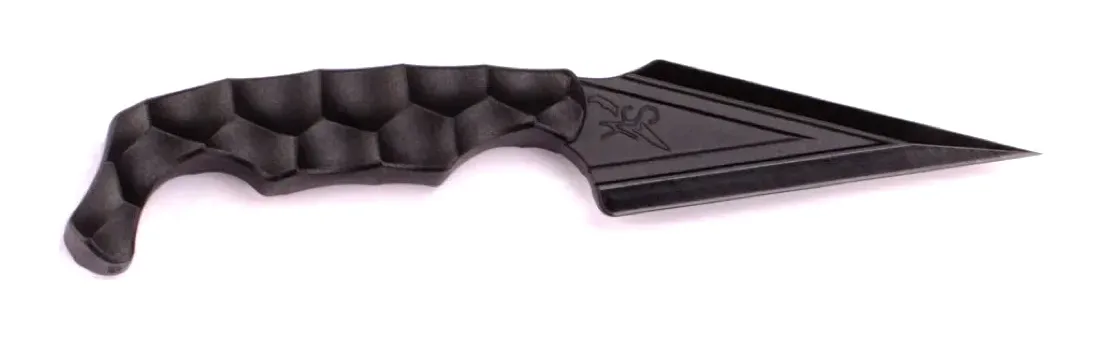
Is the grind even on both sides? The bevel should start at the same height and run at the same angle left and right. A grind that is noticeably higher on one side was done fast by someone being paid by the piece.
Does the grind line run straight? It should travel cleanly from the plunge to the tip. Waves and wobbles mean an unsteady hand or a worn belt.
Are the plunge lines even? The plunge is where the bevel starts near the handle. Both sides should start at the same point. Mismatched plunges are the single most reliable tell on a hurried knife.
This matters beyond looks. An uneven grind cuts to one side, steers in a slicing cut, and sharpens unevenly for the rest of its life.
Check the tang
Full tang means the steel runs the whole length of the handle, usually visible as a strip along the top and bottom edges between the scales. Strongest construction and the only sensible answer for a knife you will hit or lever with.
Hidden or stick tang can be perfectly good in skilled hands and is also where corners hide, because you cannot see what is in there.
Rat tail tang, a thin rod running into the handle, is the one to avoid in a working knife. It is a built in break point.
If a listing does not say, assume the worst and ask.
Hardness and what is missing
Look for an HRC figure. 57 to 59 is the working range for a using knife. A listing that names the steel but will not name the hardness is telling you something. Heat treat is where a blade is actually made, and it is invisible, which is why it is the easiest place to save money.
The same steel can be excellent or useless depending on how it was taken to hardness and how it was tempered afterwards. Anyone who does it properly is happy to tell you the number.
Be suspicious of "surgical steel", "440 stainless" with no grade letter, and "high carbon stainless" used as a brand rather than a specification. Those phrases exist to avoid naming a steel.
Handle fit
Run a thumb around where the scales meet the tang.
Can you feel a step? There should be no lip and no gap. A gap collects water and grime, and on a carbon steel knife that is where rust starts.
Are the pins flush? Proud pins mean rushed finishing and they raise blisters.
Does it fill your hand? Grip it hard. Any hot spot you can feel in thirty seconds becomes a blister in an hour.
The edge, as it arrives
A knife should arrive sharp. Not legendary, but sharp enough to take hair off an arm or cut paper cleanly.
A dull new knife means nobody put a proper edge on it, which usually means nobody spent long on anything else either.
Look at the edge bevel in good light. It should be even along its length and the same on both sides. A bevel that is wide at the heel and thin at the tip was sharpened in a hurry on a machine.
The sheath
Worth more attention than it gets.
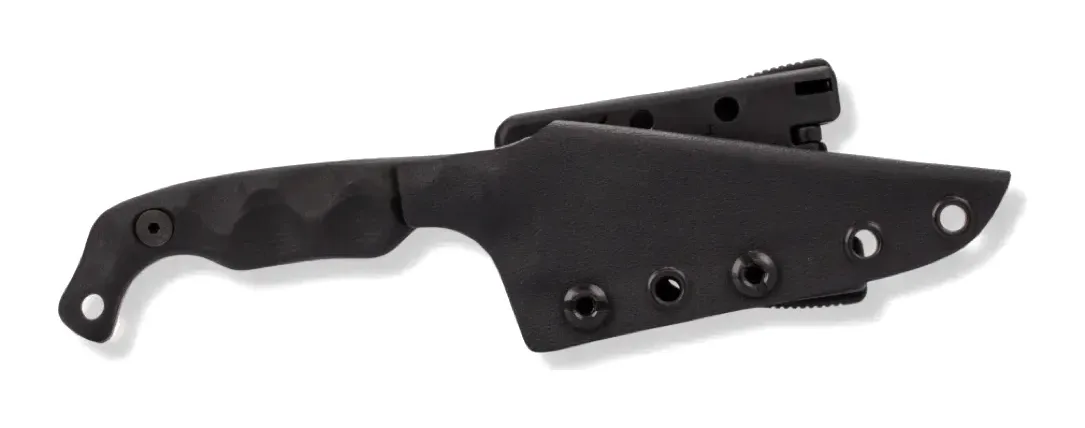
Does the knife click in and stay in when you turn it upside down and shake it? Does it draw without a fight? Does the sheath hold the blade off the stitching or the rivets? Can you move the clip?
A good knife with a bad sheath is a knife that stays in a drawer.
What a maker will tell you
The things worth knowing are the things that are expensive to do properly: the steel by name and grade, the hardness by number, the stock thickness, the tang construction, the grind, where it was made.
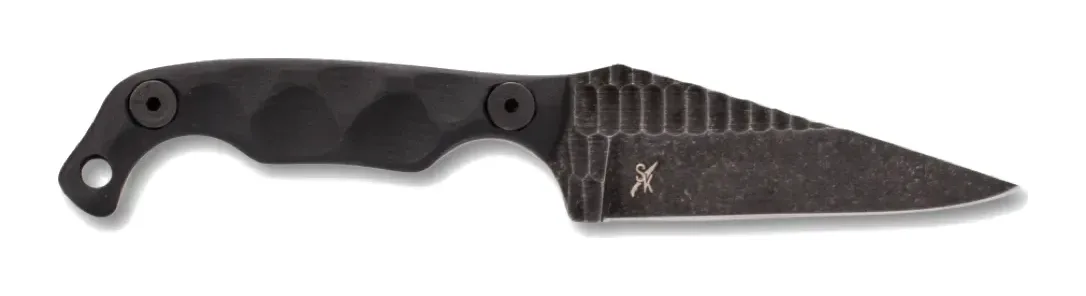
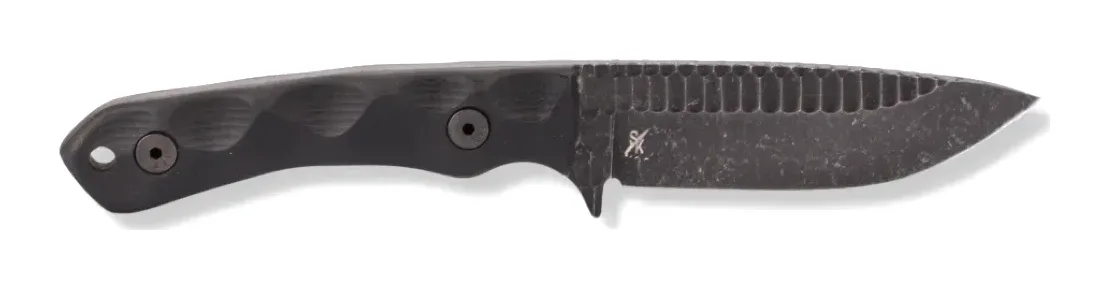
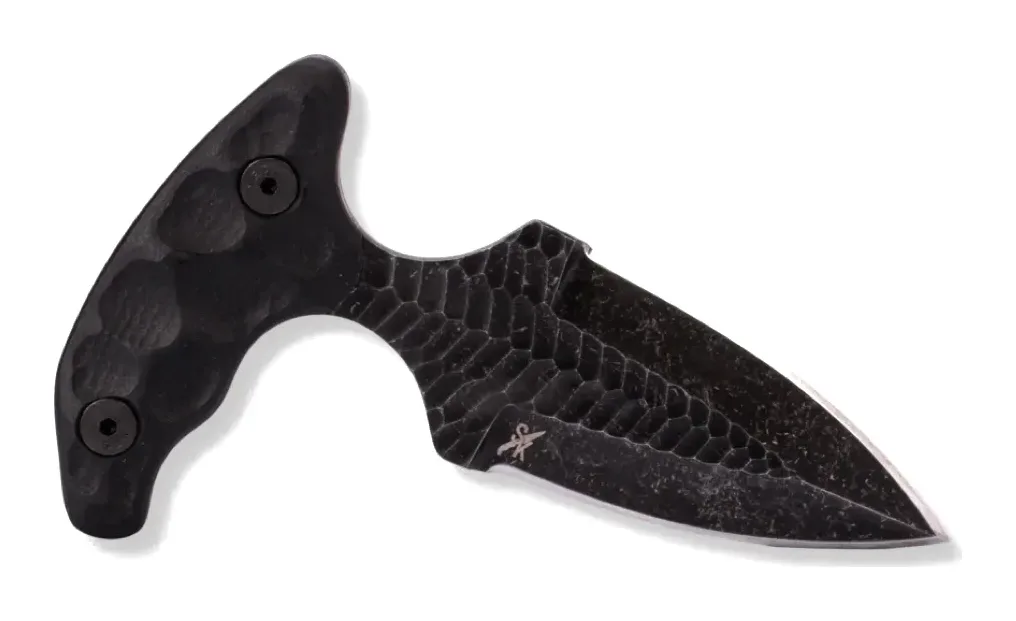
Ours are 1095 high carbon steel, 58 to 59 HRC, 5/32 or 3/16 inch stock depending on the model, full tang, flat ground, ground and heat treated and sharpened by hand in North Carolina. Those numbers are on every product page because they are the ones that decide how the knife behaves.
If a listing gives you adjectives instead of numbers, that is the answer to your question.