
How to Choose an Everyday Carry Knife
Most people buy their first everyday carry knife twice. The first one is too big, too heavy, or too nice to use, and it ends up in a drawer. The second one is the one they carry for a decade.
You can skip the first purchase.
Start with what you actually cut
Not what you might cut. What you did cut, this month.
For most people the honest list is cardboard, tape, string, zip ties, food, packaging, the odd bit of rope or webbing, and something awkward at work. That list is handled by a three inch blade.
If your real list includes field dressing an animal, processing firewood, or cutting through rubber and hose on a regular basis, you need more knife. But be honest about frequency. A knife sized for the thing you do twice a year is the wrong size for the three hundred days in between.
Size is the whole game
The knife you carry beats the knife you own. Every time.
Blade length. Three to three and a half inches covers almost everything without being a conversation. Four inches is noticeably more capable and noticeably more present on a belt. Over four and you are carrying it on purpose, not out of habit.
Weight. This is what makes a knife stay home. A heavy knife on a belt is fine for a day and tiresome by Thursday.
Thickness at the spine. Thinner cuts better and carries flatter. For everyday use you want to cut well far more often than you want to pry.
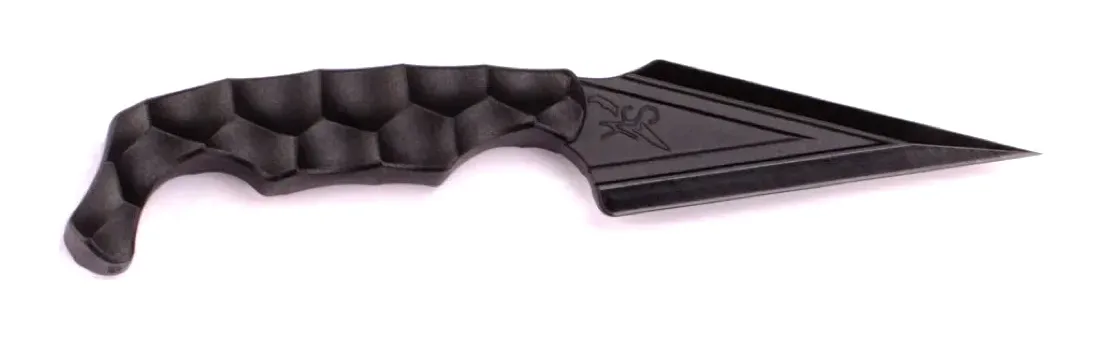
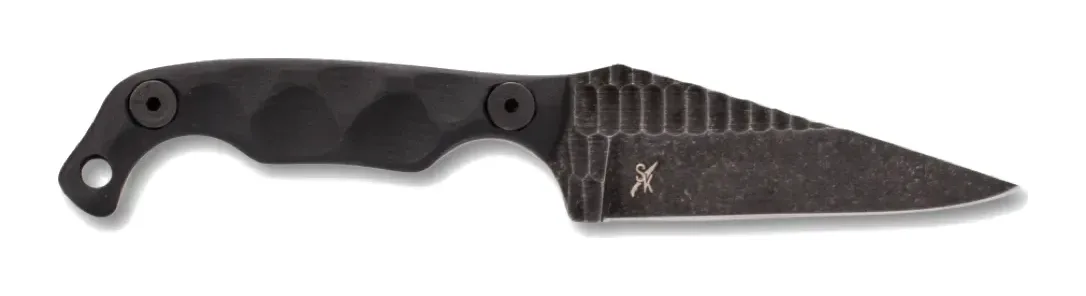
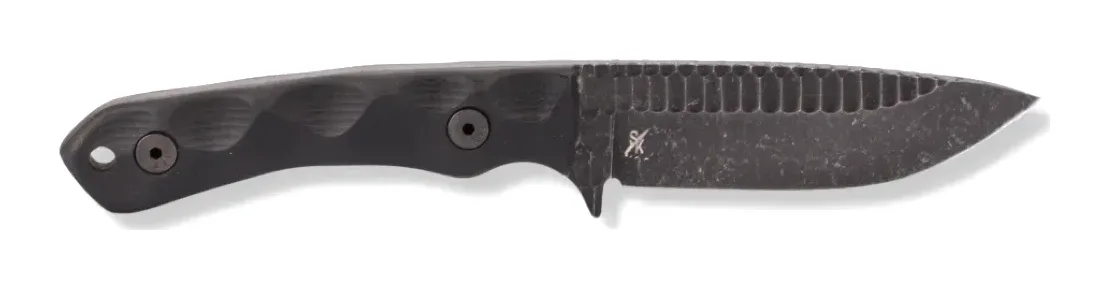
Our GP2 runs 7.75 inches overall on a 3.5 inch blade. There is a reason it is the one people end up carrying after buying something bigger first.
Fixed blade or folder
Folders carry smaller and are socially easier. That is genuinely most of the argument for them.
A fixed blade has no pivot to loosen, no lock to fail, no gap to collect grime, and it is faster to get into use. You clean it by wiping it. It is a simpler object that does the same job.
The practical objection to a fixed blade is carry. A badly sheathed fixed blade is uncomfortable and obvious. A well sheathed one, carried right, is neither.
Carry position matters more than people expect
A knife that rides wrong will not get carried, whatever it cost.
Strong side, behind the hip is the default. Out of the way sitting down, easy to reach standing up.
Scout carry, horizontal across the small of the back, hides a bigger knife under a shirt and works well in a vehicle.
Inside the waistband carries flattest and takes the most getting used to.
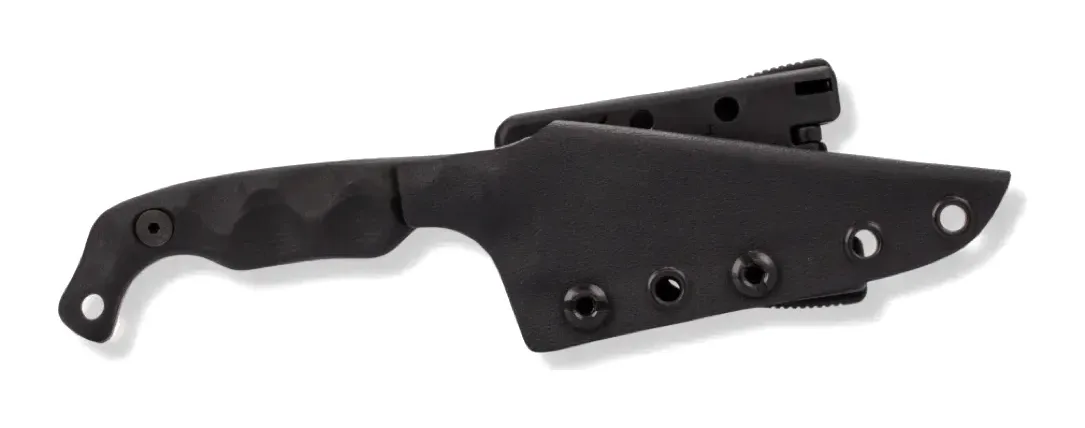
We ship with a Blade Tech Tech Lock clip for exactly this reason. You can move it around a belt, a pack strap or a pocket without tools until you find where it stops annoying you.
Steel, and why it matters less than you think
Any decent steel, properly heat treated, will outcut what you ask of it. The difference between a good steel and a great steel shows up at the tail end of a long day of cutting, and most everyday carry never gets there.
What matters more is whether you will sharpen it. A simple carbon steel like 1095 goes back to sharp in five minutes on a cheap stone. A high end stainless holds its edge longer and then needs real equipment and real patience.
A sharp simple knife beats a dull exotic one, and the simple one is sharp more often because sharpening it is not a project.
The mistakes
Buying for the fantasy. The knife for the week you spend in the backcountry is not the knife for the fifty weeks you do not.
Buying something too nice to use. A knife you are protecting is a knife you are not using. Buy one you are happy to scratch.
Ignoring the sheath. It is half the product.
Chasing steel. Spend the difference on a knife that fits your hand instead.
Carrying it without checking the law. Rules on fixed blades, length and concealment vary by state and sometimes by city. Five minutes of reading.
A reasonable first fixed blade
Three to three and a half inches of blade. Around 5/32 inch at the spine. A flat grind. A steel you can sharpen. G10 if you want grip, wood if you want to look at it. A Kydex sheath with a clip you can reposition.
That is a knife you will still be carrying in five years, with a patina on it and an edge you put on yourself.
If you want to see the size difference in person before deciding, the comparison page puts every model against each other, and our guide to reading specs covers the numbers.