
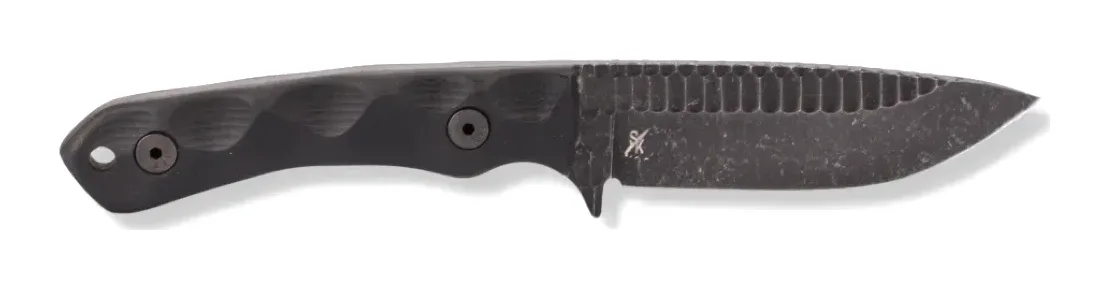
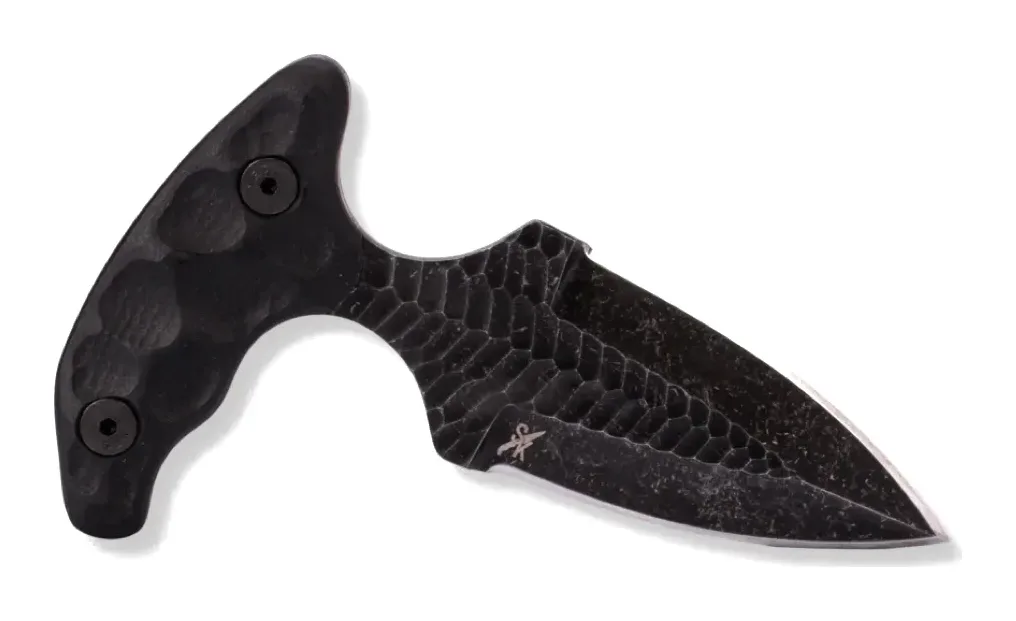
Looking After Carbon Steel: Patina, Rust and Oil
A new carbon steel knife arrives bright. Within a month of real use it will not be, and that is the knife working as intended.
The trouble is that two different things happen to carbon steel, they look similar at first, and only one of them is good.
Patina and rust are not the same thing
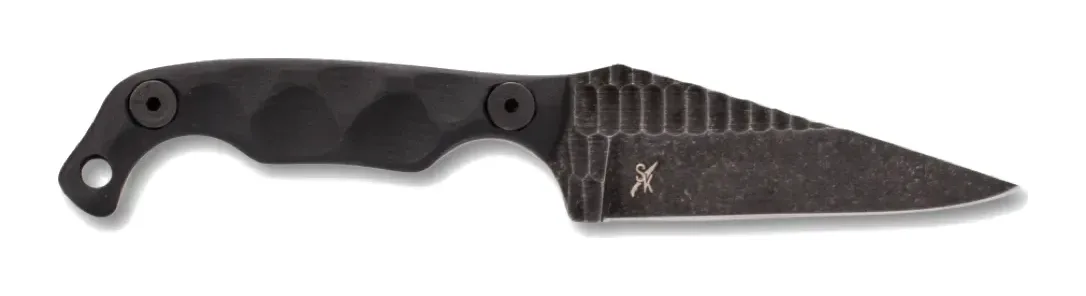
Patina is stable oxide. Grey, blue, sometimes a bit purple, flat to the touch. It forms where the steel meets acid: fruit, meat, onions, blood, wet hands. Once it settles it is a barrier, and it slows the other kind down.
Rust is iron oxide that keeps going. Orange, slightly raised, gritty under a thumbnail. It does not stop on its own. Left alone it pits the surface, and pitting is permanent.
Quick test: run a clean thumb across it. Smooth and dark is patina. Rough and orange is rust.
The whole maintenance routine
Dry it. This is ninety percent of it. Water sitting on bare carbon steel is the entire problem. After food, after fish, after rain, after washing, wipe the blade.
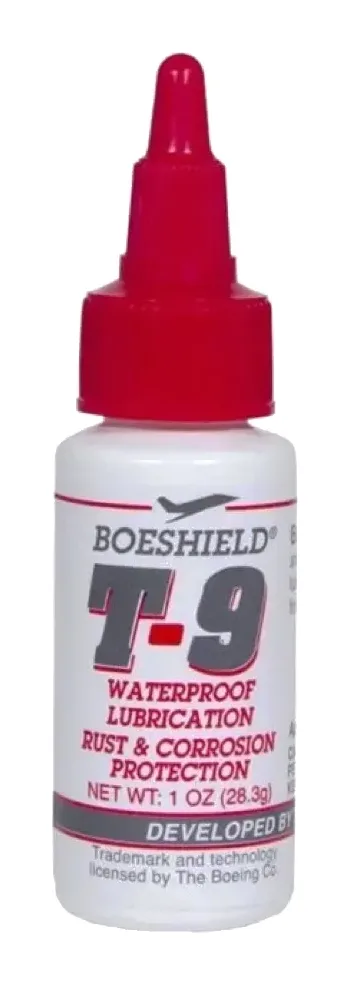
Oil occasionally. A thin film, wiped on with a rag. Mineral oil if the knife touches food. Any light machine oil if it does not. Once a month of normal use is plenty. More if the knife has been wet or lives somewhere humid.
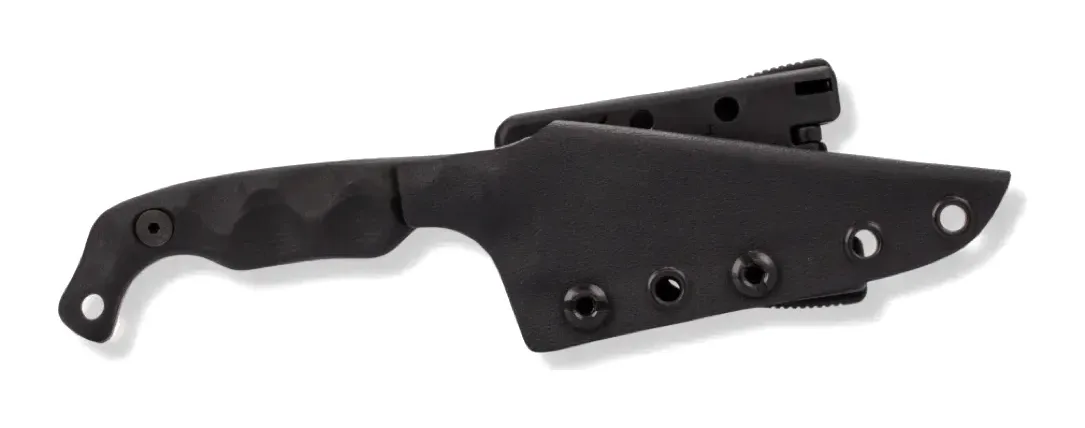
Keep it out of the sheath for storage. Kydex is excellent for carry and poor for long storage, because it traps moisture against the steel. A knife going away for the season gets oiled and left out of the sheath.
Clean it properly after fish and salt. Salt water is the fastest route to rust there is. Fresh water, dry, oil, same day.
That is the list. It takes less time than looking for the knife does.
Forcing a patina, and whether you should
Some people speed it up by sitting the blade in vinegar, mustard or hot coffee for an hour. It works. You end up with an even grey or a mottled pattern depending on what you used.
It is a cosmetic choice, not a protective one. A forced patina is thinner than one built over a season of real use, and it does not stop a fresh scratch going orange later.
Our view is that a knife should earn its colour. The patina a blade picks up from the way one person uses it is more interesting than anything you can do with a jar of mustard.
Getting rust off
Catch it early and it is nothing.
Light orange, no pitting. A cork and a little oil, or the back of a sponge. Work along the blade, not across. It comes off in a minute.
Heavier, slightly raised. 0000 steel wool or 1000 grit wet paper with oil. Light pressure. You are removing oxide, not metal.
Pitted. The pits are there to stay. Clean out what will come out, oil it well, and keep going. A pitted blade still cuts. It just has a history now.
What not to use: anything aggressive and abrasive on the edge bevel, wire wheels, or rust removers with strong acids that will take the patina off everywhere else and leave you back at bright steel.
Edges, while we are here
Carbon steel sharpens easily, which is its main advantage over a harder stainless.
Strop or steel it often. Most edges are not blunt, they are rolled. A few passes on a strop or the smooth back of a ceramic rod brings them back without removing metal.
Use a stone when stropping stops working. A medium diamond plate or a combination stone handles 1095 quickly. Keep the angle consistent and let the stone do it.
Do not chase the mirror. A working edge with a slight tooth to it cuts rope and hide better than a polished one.
A blade at 58 to 59 HRC, which is where ours sit, goes back to sharp on a cheap pocket stone in five minutes. That is the point of the steel.
What a well-used knife looks like
Grey or blue-grey across the flats. Darker where it has been through food. A bright line along the edge bevel where you have been sharpening. Handle slabs worn smooth where your thumb sits. No orange anywhere.
That is a knife somebody has been looking after by using it, which is the only maintenance regime that actually sticks.
If you want everything in one place, our care kit has the oil and the stone, and the steel comparison covers why 1095 asks for this in the first place.