Sharpening by Hand: Getting a Working Edge Back
Sharpening has been made to sound harder than it is, mostly by people selling jigs.
You need a stone, an angle you can hold, and the patience to do one side properly before starting the other.
First, is it actually dull
Most knives that feel dull are not. The edge has rolled over to one side, and a rolled edge behaves exactly like a blunt one.
Hold the edge up under a light and look straight down at it. A sharp edge reflects nothing, because there is no flat for light to catch. A dull or rolled one shows a thin bright line.
If it is rolled, a few passes on a strop or the smooth back of a ceramic rod puts it straight in under a minute, no metal removed. Do this often and you will reach for a stone a few times a year instead of monthly.
The kit
A medium diamond plate or a combination stone. Around 400 to 600 grit on one side, 1000 on the other. Cheap is fine. Diamond cuts faster and stays flat.
A strop. A piece of leather on a block, or the back of a leather belt, with a little compound. Optional and it transforms the finish.
That is the whole kit. You can spend a great deal more and the knife will not be sharper.
Finding the angle
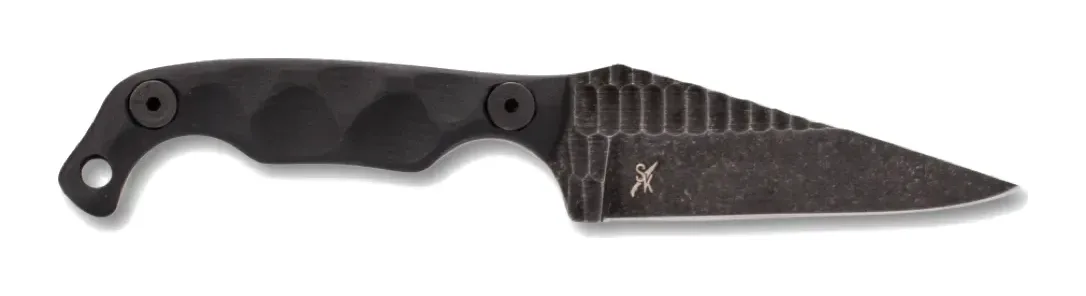
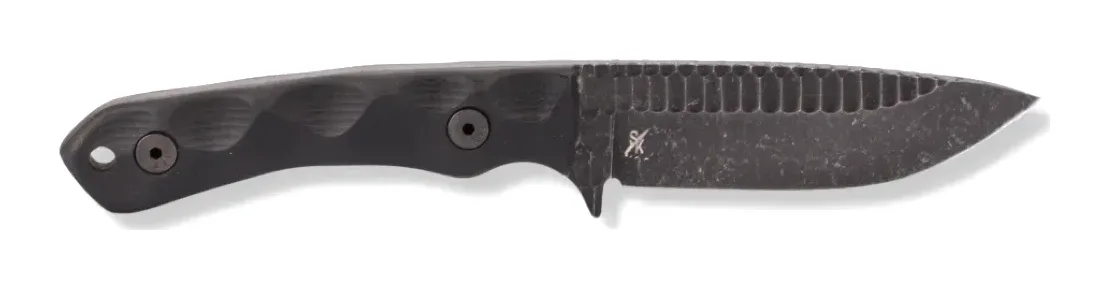
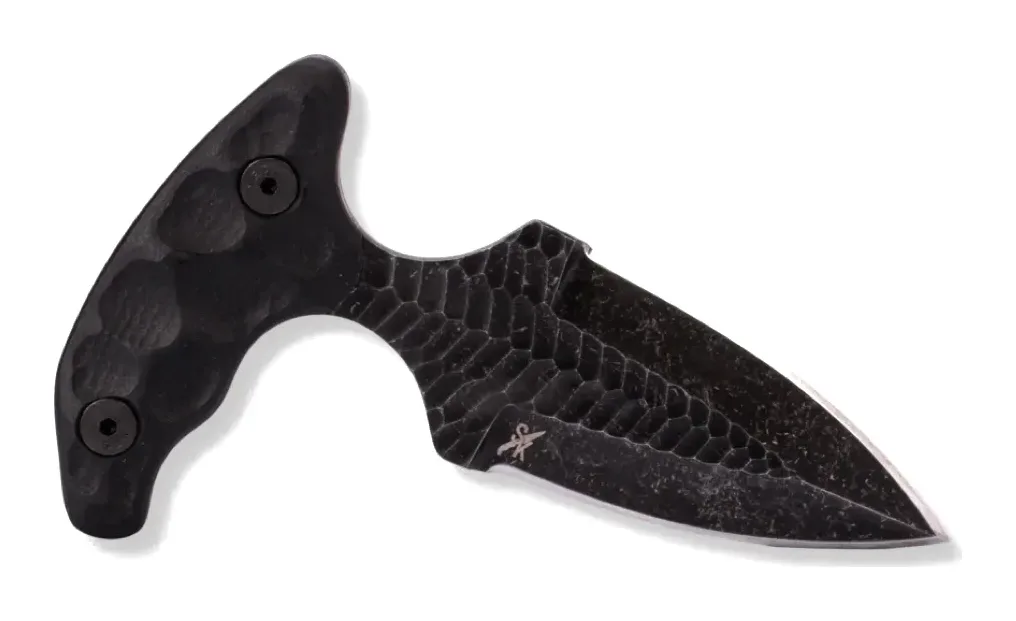
Stroup blades leave the shop sharpened at 28 degrees, except the SD1, which is sharpened at 40 degrees. You do not need a protractor.
The reliable trick: lay the blade flat on the stone, then raise the spine until you can just slide a couple of stacked quarters underneath it. That is close enough.
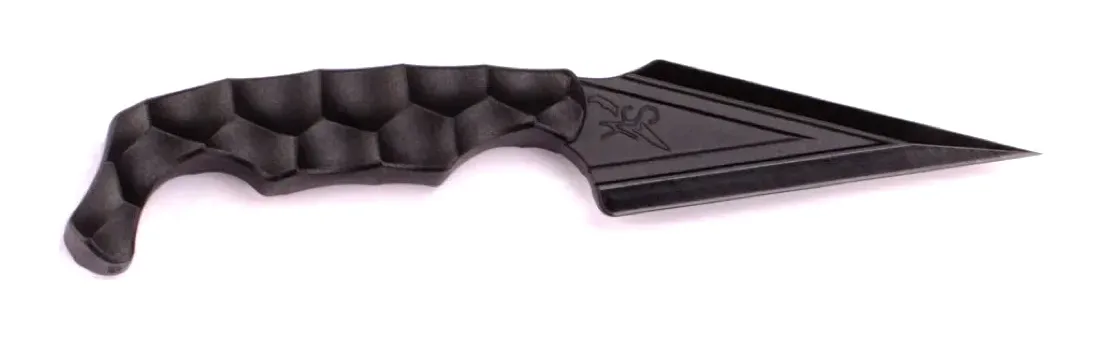
Better still, use the factory bevel. Lay the blade down, rock it until the bevel sits flat on the stone, and that is your angle. Colouring the bevel with a marker makes this obvious. Take a stroke and look. If the ink comes off the whole bevel, the angle is right. If it only comes off the top, you are too steep. Only at the edge, too shallow.
Raising a burr
This is the part people skip, and it is the only part that matters.
Work one side until you can feel a tiny wire of metal folded over along the entire length of the other side. Run a thumb off the edge, never along it. It feels like a faint catch.
No burr means you are not at the edge yet. It does not matter how long you have been going or how tired your arm is. Until there is a burr along the whole length, that section is not sharp.
Once you have a burr from heel to tip, do the same number of strokes on the other side. Then alternate, lighter each time, until the burr is minimal.
Taking the burr off
Finish with very light alternating passes, almost no pressure, at a slightly raised angle. Then strop, edge trailing, ten or fifteen passes a side.
If you leave the burr on, the knife feels wonderfully sharp for about four cuts and then goes. That is the usual reason a freshly sharpened knife seems to lose its edge immediately.
How sharp to go
For a knife that cuts rope, hide and cardboard, stop at the medium stone and strop. A slightly toothy edge bites into material better than a polished one.
For food prep and whittling, go on to the finer side.
A mirror polish looks impressive and is worse at most field work. Do not chase it.
Carbon steel specifically
1095 at 58 to 59 HRC, which is where ours sit, is a pleasure to sharpen. It responds quickly, raises a burr readily, and does not fight you.
That is a deliberate tradeoff. A harder steel would hold its edge longer and take considerably more work to bring back. We would rather you be able to fix it on a tailgate.
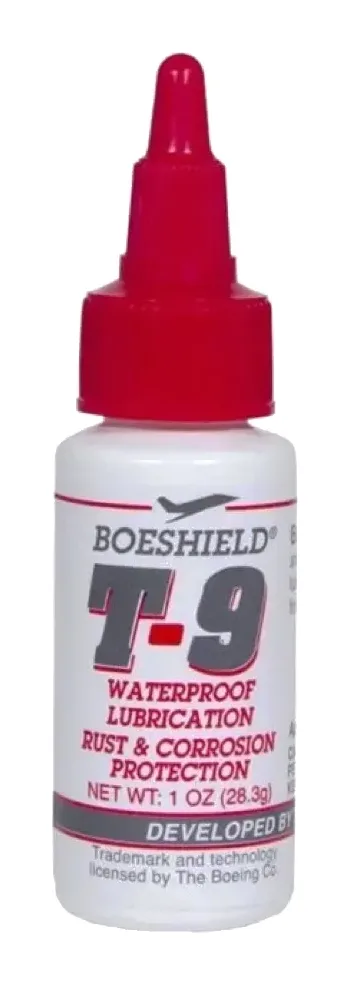
One thing to watch: sharpening removes the patina along the bevel, leaving bright steel. That bright strip will want oiling, because it is the one part of the blade with no protection on it.
A realistic routine
Strop every few uses. Medium stone when stropping stops working. Full sharpen a couple of times a year.
If you are reaching for a stone every month on normal use, your angle is probably too steep or you are leaving a burr on.
Looking after carbon steel covers the rest of the maintenance, and our care kit has the stone and the oil in one place.