Your First Fixed Blade: A Beginner's Guide
A first fixed blade is usually bought for the wrong reasons and it usually comes out fine anyway, because a decent knife is forgiving. But you can save yourself the second purchase.
Buy smaller than you want
This is the advice people ignore and later agree with.
A seven inch blade looks capable in a photo. On a belt, through a day, it is a commitment. Most first knives that end up in a drawer end up there because of size.
Three and a half to four and a half inches handles nearly everything a beginner will actually do. It skins a deer, splits kindling, preps food, cuts cord, and carries without you planning your day around it.
You can go bigger later, once you know from use what you are missing. Almost nobody goes bigger and almost everybody who starts big goes smaller.
What to actually look for
Full tang. Steel running the whole length of the handle. Non negotiable for a working knife.
4 inches of blade, give or take. 3.5 if you mostly carry, 4.5 if you mostly camp.
5/32 of an inch at the spine. Thin enough to cut well, thick enough not to worry.
A flat grind. The best all rounder. You can get clever later.
A steel you can sharpen. 1095 and similar simple carbon steels take an edge back in minutes on a cheap stone. That matters more at the start than edge retention does, because you will dull it and you will need to fix it.
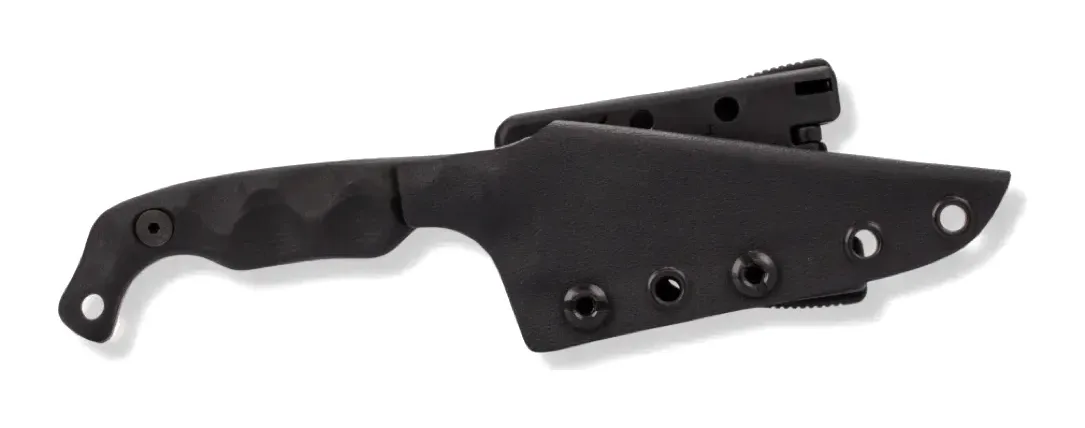
A Kydex sheath with a clip you can move. Half of whether you carry the knife is where it sits.
Spend money on the right things
Worth paying for: heat treat, grind quality, tang, sheath. These are invisible or boring and they are what the knife is.
Not worth paying for, yet: exotic steel, damascus, fancy handle materials, a famous name. All lovely. None of them make the knife cut better than a well made simple one.
A well made plain knife at two hundred dollars outperforms a badly made fancy one at four hundred, every time.
Learn to sharpen before you need to
This is the thing that separates people who enjoy knives from people who own a dull one.
Buy a cheap combination stone or a medium diamond plate. Learn the angle. Practise on the knife you just bought, badly, until it is sharp. It is not difficult and it takes an afternoon.
A knife you can sharpen is a knife you use without worrying about it. A knife you are afraid to dull is an ornament.
Check the law where you live
Rules on fixed blades vary by state and sometimes by city. Blade length limits, open versus concealed carry, where you can and cannot have one.
This is ten minutes of reading and it is genuinely worth doing before you buy rather than after.
Use it
The most common failure with a first good knife is treating it as too nice to use.
It will get scratched. The carbon steel will go grey and then blue-grey. The handle will wear smooth where your thumb sits. All of that is the knife becoming yours.
A knife with a patina and a hand sharpened edge is worth more to its owner than the same knife still bright in a box, and it is worth exactly the same to everyone else. Use it.
Where to start with ours
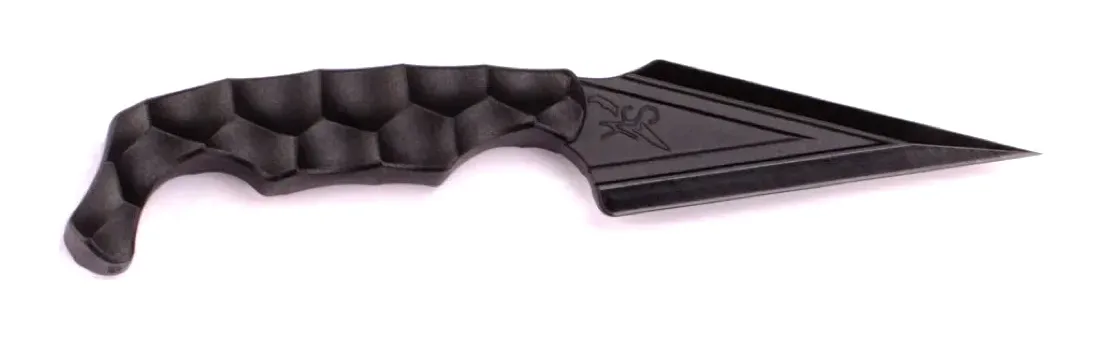
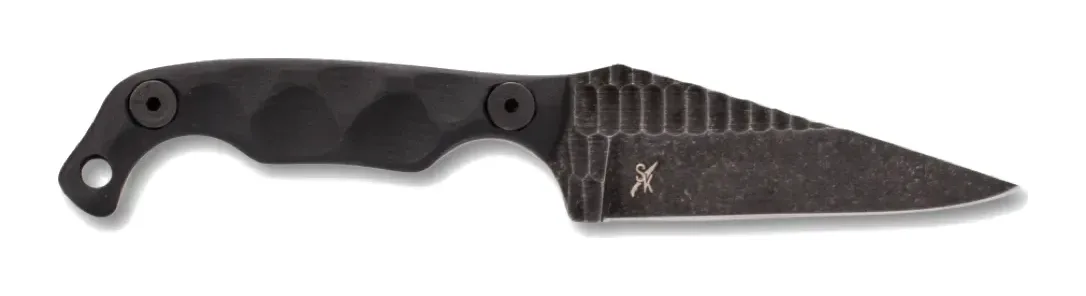
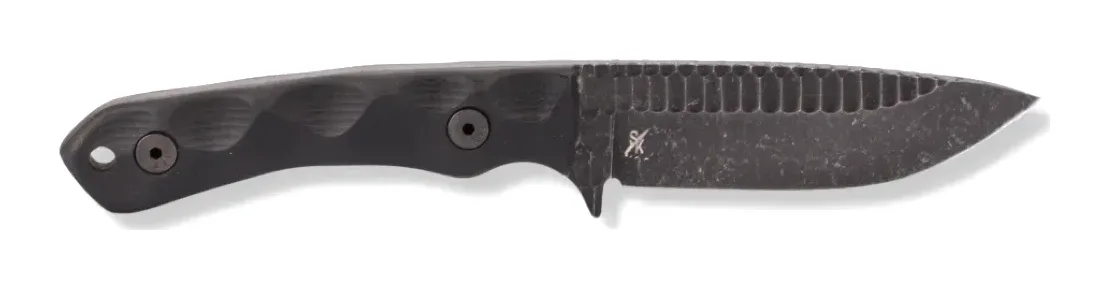
The GP2 is the one we would hand someone buying their first. Three and a half inches of blade, 7.75 overall, 5/32 stock, flat ground, 1095 at 58 to 59 HRC, Kydex with a repositionable clip.
If you know you want more knife for camp and wood, the GP1 at four inches is the same design with more of it.
The comparison page puts them side by side, and reading knife specs explains the numbers.